
Mumbai, India — April 30, 2026
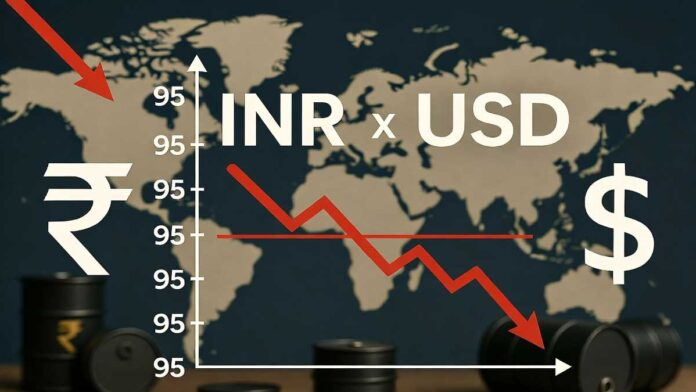
The Indian currency weakened to an unprecedented level on Thursday, with the rupee breaching the 95 mark against the US dollar for the first time in history. The sharp depreciation reflects mounting global pressures, including rising oil prices and geopolitical uncertainty.
The rupee traded in the range of 95.14 to 95.58 against the US Dollar, marking a record low. In recent sessions around April 29–30, the currency has hovered near 94.81 to above 95, staying close to its weakest-ever levels.
Oil Price Spike Drives Currency Pressure
A key factor behind the rupee’s fall is the surge in global crude oil prices. Brent crude has climbed above $115 per barrel, intensifying pressure on India, which relies heavily on oil imports.
Higher crude prices increase the country’s import bill, leading to greater demand for dollars and weakening the local currency.
Geopolitical Tensions Boost Dollar Strength
Ongoing tensions in West Asia have further strengthened the dollar’s appeal as a safe-haven asset. Investors globally are shifting toward the dollar amid uncertainty, putting additional pressure on emerging market currencies, including the rupee.
Foreign Fund Outflows Add to Weakness
Sustained selling by foreign institutional investors has also contributed to the rupee’s decline. Capital outflows from Indian equity and debt markets have increased demand for the dollar, accelerating the currency’s depreciation.
RBI Intervention Fails to Stabilize Currency
Despite intermittent intervention by the Reserve Bank of India, the rupee has remained under pressure. Market participants note that while the central bank may be smoothing volatility, broader global factors continue to dominate currency movement.
Economic Impact: Inflation Risks Rise
The weakening rupee is expected to have wide-ranging effects on the Indian economy:
- Imported goods, especially crude oil and electronics, are becoming more expensive
- Overseas education and travel costs are rising
- Inflationary pressures are likely to intensify in the coming months
Economists warn that sustained currency weakness, combined with high energy prices, could pose challenges for macroeconomic stability if global conditions remain volatile.