Lahore, Pakistan — February 9, 2026
The uncertainty surrounding the India vs Pakistan clash at the T20 World Cup has taken a dramatic turn, with Pakistan now signaling its readiness to face India — but only if certain conditions are met.
According to media reports, the Pakistan Cricket Board (PCB) has placed **three key demands before the International Cricket Council (ICC) as a prerequisite for withdrawing its earlier threat of boycott.
🔁 From Boycott Threat to Conditional Green Signal
The development marks a shift from Pakistan’s earlier stance, when it had publicly indicated it would not play against India, even at a neutral venue. That position has now softened following high-level discussions in Lahore.
The ICC is keen to ensure that the world’s most-watched and revenue-generating cricket rivalry proceeds as scheduled, given its massive global viewership and commercial importance.
🤝 High-Level Meeting in Lahore
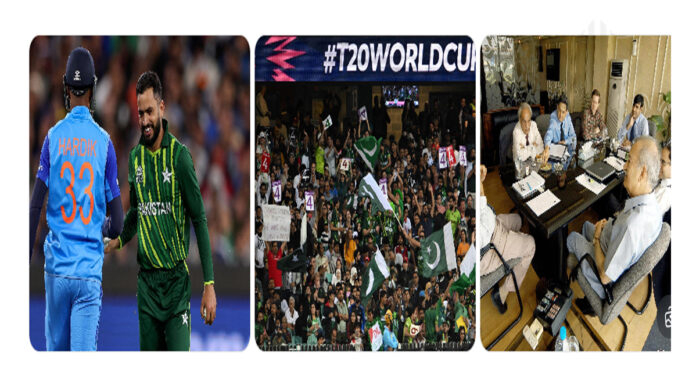
A crucial meeting took place in Lahore on Sunday, February 8, involving senior officials from the PCB and ICC.
According to reports, those present included:
Mohsin Naqvi, Chairman of the PCB
Imran Khwaja, Deputy Chairman of the ICC
Aminul Islam Bulbul, President of the Bangladesh Cricket Board
Sanjog Gupta, ICC CEO (joined virtually)
The talks come as the group-stage match between India national cricket team and Pakistan national cricket team draws closer.
📋 What Are Pakistan’s Three Demands?
As per a report by Cricbuzz, Pakistan has asked for the following assurances:
A larger share of ICC revenue
Restoration of bilateral cricket series with India
Strict enforcement of on-field protocols, including the handshake protocol
PCB sources argue that these guarantees are necessary for Pakistan to fully commit to the match.
⚖️ Why These Demands Remain Contentious
Cricket analysts note that the demands raise complex challenges:
Bilateral cricket between India and Pakistan has been suspended for years due to political tensions, with India consistently ruling out resumption.
Revenue sharing within the ICC is linked to commercial contribution, where India remains the largest market and revenue driver.
Protocol-related demands fall under ICC match regulations but are unlikely to be deal-breakers on their own.
As a result, any agreement would require delicate negotiations and compromise.
🔥 How the Controversy Began
The standoff began when the Pakistani government announced that the national team would not play India, without offering detailed reasons.
Within cricketing circles, it was widely believed that Pakistan’s stance was aligned with Bangladesh, which had earlier raised security concerns and sought to move matches away from India — a request rejected by the ICC.
🌍 ICC Racing Against Time
With the group-stage schedule fast approaching, the ICC is under pressure to resolve the impasse quickly. Reports suggest Bangladesh may also seek compensation, adding another layer to the negotiations — where Pakistan’s cooperation could prove pivotal.
🏟️ What’s at Stake
The India–Pakistan match is not just another fixture. It is widely regarded as a global sporting event, driving record-breaking viewership, sponsorships, and broadcast revenue.
Any disruption could have significant financial and reputational implications for the tournament.
🔎 What Happens Next
All eyes are now on the ICC’s response. If a middle ground is found, fans worldwide may get the marquee clash they are waiting for. If not, the T20 World Cup could face its biggest controversy yet.