New Delhi, India — March 28, 2026
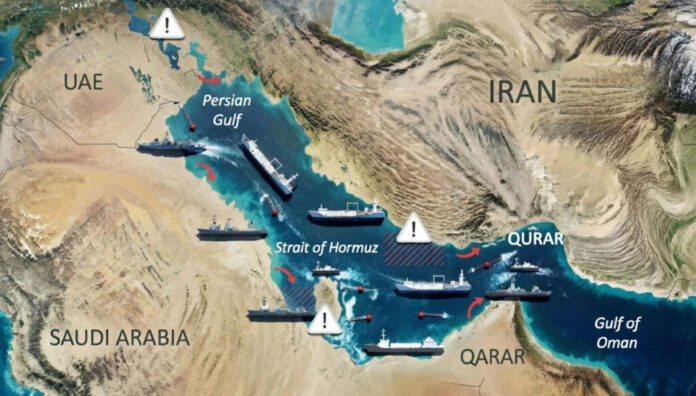
Amid escalating geopolitical tensions in West Asia, the Government of India has confirmed that 20 Indian-flagged ships carrying 540 Indian seafarers are currently present near the strategically critical Strait of Hormuz, where shipping movement has been disrupted.
The Ministry of Ports, Shipping and Waterways stated on Saturday that all vessels and crew members are safe, and that authorities are closely monitoring the situation in coordination with multiple agencies.
Continuous Monitoring and Safety Measures
According to the ministry, there have been no reported incidents involving Indian vessels in the past 24 hours. The government has activated a multi-agency coordination mechanism involving the Directorate General of Shipping, shipowners, RPSL agencies, and Indian diplomatic missions in the region.
Officials confirmed that necessary safety protocols have been implemented to ensure the well-being of Indian seafarers operating in the high-risk zone.
Seafarer Welfare and Evacuations
The Directorate General of Shipping has already facilitated the safe return of over 938 Indian seafarers from conflict-affected areas. Of these, 25 seafarers were repatriated in the last 24 hours alone, reflecting the government’s ongoing evacuation efforts.
The Ministry of External Affairs continues to coordinate with Indian missions abroad to maintain contact with Indian nationals and provide assistance wherever required.
Ports Operating Normally Across India
Despite disruptions in international waters, port operations across India remain unaffected. Authorities have confirmed smooth functioning at ports in Gujarat, Maharashtra, Goa, Kerala, Andhra Pradesh, and Puducherry, with no congestion reported.
This stability is crucial for maintaining India’s trade flows and supply chains during a period of heightened global uncertainty.
Large-Scale Evacuations Underway
Since February 28, approximately 497,000 passengers have returned to India from conflict-affected regions, highlighting the scale of the government’s evacuation and support operations.
Indian missions continue to issue advisories and assist the diaspora, with safety and welfare remaining a top priority.
Strategic Monitoring of Gulf Developments
The government is closely tracking developments across the Gulf and broader West Asia region. Missions have been instructed to remain on high alert and ensure timely assistance to Indian citizens.
Officials emphasized that preparedness measures are in place to respond to any escalation or emergency scenario.
Naval Deployment Ensures Maritime Security
On March 28, two additional merchant vessels carrying petroleum products for India were reported to be passing through the Strait of Hormuz, despite ongoing disruptions.
In response to the evolving security situation, the Indian Navy has deployed warships near key maritime routes and ports to ensure the safety of commercial shipping.
The deployment underscores India’s commitment to safeguarding critical sea lanes, which are vital for energy imports and global trade.
Why the Strait of Hormuz Matters
The Strait of Hormuz is one of the world’s most important oil transit chokepoints, handling a significant share of global petroleum shipments. Any disruption in this corridor can have far-reaching consequences for energy markets and global trade.
For India, which relies heavily on energy imports from the region, ensuring uninterrupted maritime access remains a strategic priority.