New Delhi, India — February 6, 2026
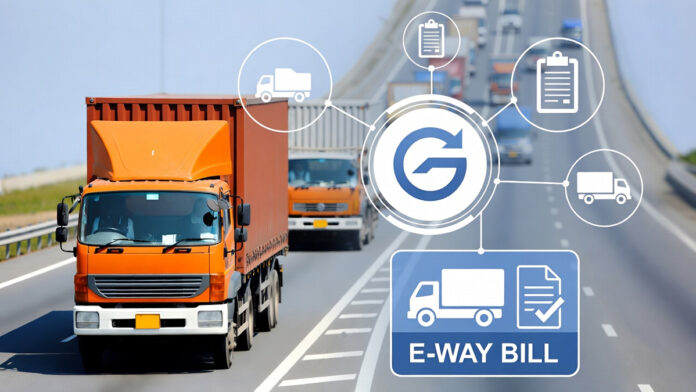
The Government of India is holding discussions with state governments to reform and strengthen the e-way bill framework, with the proposal expected to be placed before the GST Council in its upcoming meeting.
According to the Economic Survey 2025–26, the next phase of GST reforms could focus on redefining the e-way bill system—not merely as a tool for enforcement and control, but as a mechanism to enable smoother and faster movement of goods across states.
Push for Liberalized Goods Movement
Officials said that reforms in the e-way bill mechanism would help liberalize freight movement, reduce transportation delays, and cut compliance costs for businesses, while still ensuring effective and non-intrusive tax monitoring.
“We are working with states on e-way bill reforms and will place the proposal before the GST Council,” sources said, indicating that consultations are at an advanced stage.
Role of the GST Council
The GST Council, chaired by the Finance Minister of India and comprising state finance ministers, last met on September 3, when it decided to cut tax rates on 375 goods and rationalize GST slabs.
The upcoming meeting is expected to deliberate on operational reforms aimed at improving logistics efficiency and tax compliance simultaneously.
Technology-Driven Oversight
The Economic Survey also recommended integrating electronic seals (e-seals) and electronic locking systems with the e-way bill framework and vehicle-tracking technologies. Such integration would enable end-to-end tracking of goods without repeated physical stoppages on highways.
Officials believe this approach would significantly reduce roadside inspections, improve turnaround times, and strengthen compliance through digital oversight rather than manual intervention.
What This Means for Businesses
If implemented, the proposed reforms could:
Lower logistics costs
Reduce transit delays
Minimize physical checks
Improve ease of doing business
Maintain strong tax governance
The government sees the revamp as a critical step toward modernizing India’s freight and taxation ecosystem in line with digital-first governance goals.