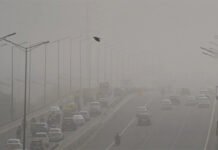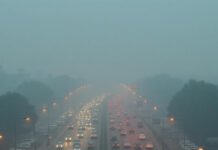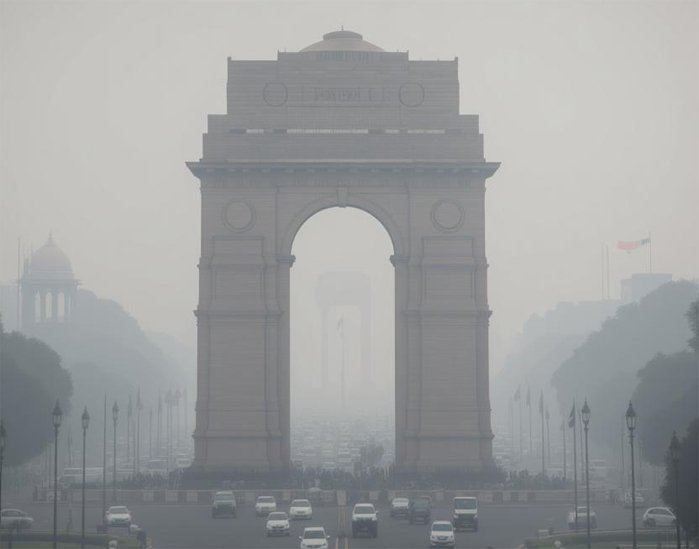
New Delhi is once again gasping for breath. The morning after Diwali has brought with it a thick, toxic haze across the National Capital Region, with air quality dipping to “hazardous” levels. The city’s overall Air Quality Index (AQI) crossed 400 in several localities, according to data from the Central Pollution Control Board (CPCB).
At least 34 out of 38 air monitoring stations in Delhi recorded AQI readings in the red zone, ranging from “very poor” to “severe.” Anand Vihar, Jahangirpuri, and Mundka reported some of the highest readings — between 440 and 480 — triggering panic among residents.
“It feels like we’re inhaling smoke with every breath. My son has been coughing since morning,” said Renu Sharma, a resident of East Delhi.
Toxic cocktail of causes
Experts attribute the spike to a combination of Diwali firecracker emissions, stagnant weather conditions, and stubble burning in Punjab and Haryana. “This is not just post-Diwali pollution — it’s a seasonal crisis worsened by low wind speeds,” said environmentalist Sunita Narain of the Centre for Science and Environment.
The System of Air Quality and Weather Forecasting and Research (SAFAR) said that Delhi’s AQI reached 345 by Monday evening and could worsen further as wind speeds remain low.
Government’s emergency response
Delhi Environment Minister Gopal Rai announced that the government is considering cloud seeding and artificial rain to disperse pollutants. “We are in talks with IIT Kanpur to trigger artificial rain if weather conditions permit,” he said.
The Graded Response Action Plan (GRAP) has also been implemented, banning construction activities, diesel vehicles, and open waste burning in several zones.
Political blame game resumes
As the air thickens, so does the political war of words. AAP leaders have blamed “cracker burning despite bans,” while opposition parties accused the Delhi government of “failing to control stubble burning.”
“Every year, we see the same movie. People celebrate, politicians blame each other, and citizens suffer,” said activist Bhavreen Kandhari.
Health concerns peak
Doctors are warning of a surge in respiratory and cardiovascular cases. Hospitals across the city have reported a 20–25% rise in patients complaining of breathlessness and asthma attacks.
The Indian Medical Association (IMA) issued an advisory asking citizens to stay indoors, avoid early-morning walks, and use N95 masks outdoors.
International spotlight
Global media outlets, including Reuters and The Guardian, described Delhi’s air as “unbreathable.” Several foreign embassies have issued health advisories for their staff.
“If this level of pollution continues, Delhi may again top the list of the world’s most polluted capitals,” warned a World Health Organization (WHO) official.
Bottom line
While the festive glow fades, the pollution cloud lingers. As Delhiites pray for cleaner air — or perhaps rain — experts warn that without sustainable urban planning and rural crop management, the capital will continue to choke each winter.