Washington, D.C. | July 2, 2026
Alibaba, AUS Merchant Services Reach $600 Million DOJ Settlement Over Illegal Drug Sales Allegations
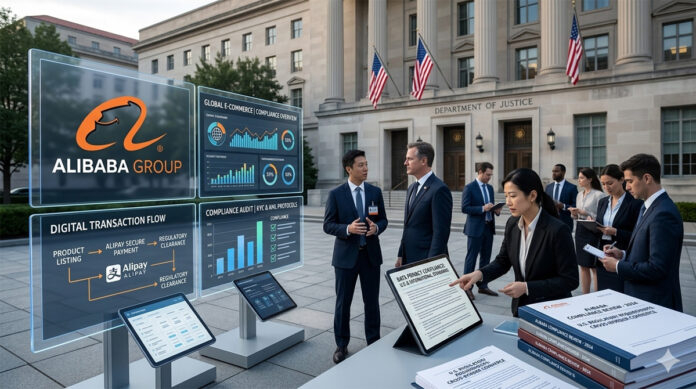
Alibaba DOJ Settlement has resulted in one of the largest regulatory resolutions involving a global e-commerce platform, with Chinese technology giant Alibaba Group and its U.S.-based payment processor, AUS Merchant Services, agreeing to pay a combined $600 million under separate non-prosecution agreements with the U.S. Department of Justice (DOJ). The agreements resolve allegations that the companies failed to prevent merchants from selling and importing illegal pharmaceuticals, listed chemicals, and pharmaceutical counterfeiting equipment into the United States through Alibaba’s online marketplaces.
According to the DOJ, the settlement includes a $125 million criminal penalty and $200 million forfeiture by Alibaba, while AUS Merchant Services will pay an $85 million criminal penalty and forfeit $190 million, bringing the total financial resolution to $600 million. Both companies entered into non-prosecution agreements, accepted responsibility for the conduct of their officers and employees related to the matter, and committed to strengthening compliance programs and cooperating with future investigations.
DOJ Says Illegal Sales Continued for Nearly Nine Years
The Justice Department said Alibaba acknowledged that between January 2016 and December 2024, merchants using Alibaba.com and AliExpress engaged in approximately 80,000 transactions involving products that were illegally imported into the United States, including pharmaceuticals, listed chemicals, and pharmaceutical counterfeiting equipment. The combined gross merchandise value of those transactions exceeded $200 million, according to the department.
Federal investigators conducted more than 40 undercover purchases during the investigation, successfully acquiring pharmaceuticals and pharmaceutical-manufacturing equipment that were prohibited from being imported into the United States. Prosecutors said these purchases demonstrated that illegal products remained available despite company policies intended to restrict such sales.
Compliance Controls Deemed Inadequate
Although Alibaba maintained written policies prohibiting the sale of restricted products, the DOJ said internal employees had raised concerns that compliance controls were insufficient to detect and prevent illegal listings.
According to the department, some merchants allegedly used Alibaba’s internal messaging tools to facilitate prohibited transactions before directing buyers to encrypted third-party messaging platforms to continue communications outside Alibaba’s systems.
The company also acknowledged that it generated revenue from some of those merchants through membership subscriptions, advertising, marketing services, shipping arrangements, and payment-processing fees.
UN Budget Rules Reform Approved as Guterres Welcomes Financial Overhaul by General Assembly
Payment Processor Also Admitted Compliance Failures
The Justice Department said AUS Merchant Services, Alibaba’s U.S.-based payment processor and a subsidiary of Ant Group, admitted that its anti-money laundering (AML) compliance program failed to prevent certain merchants from using its payment-processing services to facilitate prohibited sales between January 2020 and December 2023.
Investigators found that AUS’s transaction-monitoring system did not fully incorporate certain wire-transfer data, limiting its ability to identify higher-risk transactions, including payments originating from high-risk jurisdictions or involving multiple payers.
In some cases, prosecutors said AUS reported problematic merchants to Alibaba after internal reviews, yet those merchants allegedly continued selling prohibited products to U.S. customers.
DOJ: Online Platforms Must Prevent Illegal Products
Assistant Attorney General Brett A. Shumate of the Justice Department’s Civil Division said the resolution demonstrates the government’s commitment to ensuring that companies operating online marketplaces and digital payment platforms keep illegal, unapproved, misbranded, and dangerous foreign pharmaceuticals off their platforms.
Separately, Assistant Attorney General Tyson Duva of the Criminal Division said inadequate compliance systems allow criminal actors to exploit e-commerce platforms for unlawful profit, emphasizing that robust screening and monitoring procedures are essential for protecting public safety.
Alibaba and AUS Commit to Stronger Compliance Measures
As part of the Alibaba DOJ Settlement, both Alibaba Group and AUS Merchant Services agreed to implement enhanced compliance measures designed to prevent similar violations in the future.
According to the U.S. Department of Justice, the companies accepted responsibility for the conduct of their officers, directors, employees, and agents in connection with the matters covered by the agreements. They also committed to strengthening internal compliance programs, improving transaction monitoring, and continuing to cooperate with U.S. law enforcement authorities in ongoing and future investigations.
The DOJ said these commitments are intended to reduce the risk of illegal pharmaceuticals, listed chemicals, and equipment used to manufacture counterfeit drugs reaching U.S. consumers through international e-commerce platforms.
UN Budget Rules Reform Approved as Guterres Welcomes Financial Overhaul by General Assembly
Companies Outline Improvements to Compliance Programs
The Justice Department noted that Alibaba and AUS Merchant Services have already taken steps to improve their screening procedures and compliance systems.
Among the reported improvements are:
- Enhanced merchant due diligence and verification.
- Stronger monitoring of high-risk transactions.
- Expanded screening of product listings.
- Improved detection of suspicious payment activity.
- Better coordination between compliance and enforcement teams.
- Greater cooperation with U.S. regulatory and law enforcement agencies.
Officials said these measures are expected to significantly reduce opportunities for merchants attempting to use the platforms for prohibited transactions.
DOJ Highlights Risks Facing Global E-Commerce Platforms
The case underscores the growing scrutiny facing global e-commerce companies as regulators seek to prevent online marketplaces from being used to distribute illegal products across international borders.
According to the DOJ, sophisticated criminal networks increasingly rely on digital marketplaces, encrypted communications, and online payment systems to reach customers worldwide. As cross-border online commerce continues to expand, authorities are placing greater responsibility on marketplace operators and payment providers to identify suspicious activity and prevent unlawful transactions.
Assistant Attorney General Tyson Duva said effective compliance programs are essential because inadequate controls can allow criminals to exploit legitimate platforms for illegal profit.
Non-Prosecution Agreements Explained
Rather than pursuing criminal prosecution, the Justice Department entered into separate non-prosecution agreements (NPAs) with Alibaba and AUS Merchant Services.
Under an NPA, prosecutors agree not to bring criminal charges provided the company fulfills specified obligations, including:
- Paying agreed financial penalties.
- Accepting responsibility for covered conduct.
- Cooperating with ongoing investigations.
- Implementing compliance improvements.
- Meeting reporting and monitoring requirements.
Failure to comply with these conditions could expose a company to further enforcement action.
Alibaba’s Global Business Footprint
Founded in 1999, Alibaba Group has grown into one of the world’s largest technology and e-commerce companies.
Its major platforms include:
Alibaba.com
One of the world’s largest business-to-business (B2B) online marketplaces, connecting manufacturers, wholesalers, exporters, and buyers across hundreds of countries.
AliExpress
A global business-to-consumer (B2C) shopping platform that enables consumers worldwide to purchase products directly from merchants, primarily based in Asia.
Alibaba Group is publicly traded on both the New York Stock Exchange (NYSE) and the Hong Kong Stock Exchange (HKEX) and serves millions of buyers and sellers globally.
Growing Regulatory Focus on Cross-Border Digital Commerce
The settlement reflects broader efforts by U.S. authorities to strengthen oversight of international digital marketplaces and payment processors.
Regulators have increasingly emphasized that technology companies operating global platforms must maintain effective controls to detect prohibited products, verify merchants, monitor transactions, and cooperate with law enforcement when suspicious activity is identified.
The DOJ said preventing illegal pharmaceuticals and counterfeit drug-manufacturing equipment from entering the United States remains a significant public safety priority.
Key Takeaways
- Alibaba Group and AUS Merchant Services agreed to pay a combined $600 million under separate non-prosecution agreements with the U.S. Department of Justice.
- The agreements resolve allegations related to failures to prevent illegal pharmaceuticals and related products from being sold through Alibaba’s online marketplaces.
- Alibaba agreed to pay a criminal penalty and forfeiture, while AUS Merchant Services also agreed to criminal penalties and forfeiture.
- Both companies committed to strengthening compliance systems, enhancing transaction monitoring, and cooperating with U.S. authorities.
- The DOJ said the case reinforces expectations that global e-commerce platforms maintain effective safeguards against illegal cross-border trade.
Frequently Asked Questions
What is the Alibaba DOJ Settlement?
The Alibaba DOJ Settlement refers to separate non-prosecution agreements between Alibaba Group, AUS Merchant Services, and the U.S. Department of Justice resolving allegations related to illegal pharmaceutical sales through Alibaba’s online marketplaces.
How much will the companies pay?
Together, Alibaba Group and AUS Merchant Services agreed to pay approximately $600 million through criminal penalties and forfeitures.
What products were involved?
According to the DOJ, the investigation involved illegal pharmaceuticals, listed chemicals, and equipment used to manufacture counterfeit drugs that were allegedly sold through merchants using Alibaba platforms.
Will criminal charges be filed?
Under the non-prosecution agreements, the DOJ agreed not to pursue criminal prosecution provided the companies fulfill all obligations outlined in the agreements.
What changes have the companies agreed to make?
The companies committed to strengthening compliance programs, improving merchant screening, enhancing transaction monitoring, and cooperating with future law enforcement investigations.