NEW DELHI/CARACAS — June 26, 2026
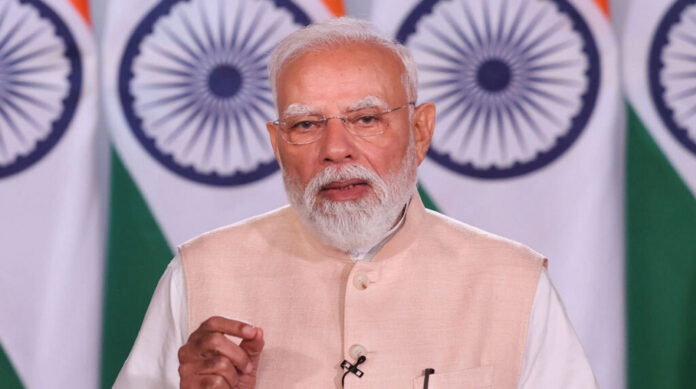
PM Modi Venezuela earthquake statement drew international attention after Prime Minister Narendra Modi expressed grief over the devastating earthquake that struck Venezuela and said India stands ready to provide “all possible assistance” to the South American nation as rescue efforts continue and the scale of the destruction becomes clearer.
In a message posted on social media, Modi said he was deeply saddened by the loss of life and destruction caused by the powerful earthquakes that hit Venezuela on Wednesday. He offered condolences to families who lost loved ones, wished a speedy recovery to the injured, and said India stands in solidarity with the Venezuelan people during what he described as an extremely difficult time.
“I am deeply saddened by the devastation caused by the severe earthquake in Venezuela,” Modi said in his message. “On behalf of India, I extend my heartfelt condolences to the government and people of Venezuela, especially to the families who have lost their loved ones. We pray for the speedy recovery of the injured and stand in solidarity with all those affected. India is ready to provide all possible assistance.” The post came as multiple governments around the world began issuing statements of support and assessing humanitarian aid options after the disaster.
Venezuela reels after back-to-back powerful earthquakes
The Indian prime minister’s message came after two powerful earthquakes struck Venezuela in quick succession on Wednesday evening, triggering widespread damage, panic, and an emergency response across multiple parts of the country. According to Reuters and the U.S. Geological Survey (USGS), the first earthquake measured magnitude 7.2, followed about 39 seconds later by a second, stronger magnitude 7.5 tremor. The quakes struck west of Caracas, near the country’s north-central coast, and were shallow enough to cause major shaking across urban areas.
The tremors caused buildings to collapse in Caracas and other affected areas, while emergency services rushed to search through rubble and assess structural damage. Venezuelan authorities declared a state of emergency, closed Simón Bolívar International Airport because of damage, and suspended school classes in several areas as aftershocks continued. Reuters reported that rescue operations were still underway and that authorities had not immediately released a comprehensive nationwide death toll, even as fears of high casualties mounted.
While some early reports and seismic models suggested the disaster could prove extremely deadly, official casualty numbers had not been fully established at the time of writing. That distinction is important because in major earthquakes, early estimates often shift dramatically as search-and-rescue operations continue and governments verify missing persons, injuries, and fatalities.
Global leaders and public figures send support messages
India was among the countries to publicly offer sympathy and support after the earthquake, but it was far from alone. Social media platforms were flooded with messages from political leaders, diplomats, public figures, and members of the Venezuelan diaspora as images of collapsed buildings and rescue efforts spread online.
Your source material notes that Venezuelan opposition leader María Corina Machado urged citizens to stay strong and pray for those affected, while El Salvador President Nayib Bukele expressed solidarity with the Venezuelan people during the crisis. U.S.-based political figures also posted messages of support for victims, missing persons, and emergency responders.
That outpouring reflects the scale of concern generated by the earthquake, which has quickly become one of the biggest disaster stories in the region this year. Beyond the immediate humanitarian toll, the quake has also disrupted transport, communications, and public services, raising the likelihood that Venezuela will need outside assistance if the damage proves as severe as early assessments suggest.
What officials in Venezuela have said so far
In a late-night national address, Venezuela’s interim leadership acknowledged significant damage in multiple states but did not provide a full accounting of deaths, injuries, or destroyed homes. Reuters reported that interim President Delcy Rodríguez declared a state of emergency and confirmed damage to key infrastructure, including the closure of the country’s main international airport. She also extended condolences to the families of those killed, though no official nationwide fatality figure was released in that statement.
Interior officials and local responders have meanwhile been working to clear debris, search for trapped survivors, and stabilize heavily damaged buildings. Reuters footage and witness accounts described emergency workers rescuing victims from collapsed structures in Caracas and other affected areas as power outages and communications problems complicated response efforts.
The USGS warned shortly after the quake that high casualties and extensive damage were likely, based on the quake’s magnitude, shallow depth, and proximity to populated areas. But those USGS estimates are hazard projections — not confirmed death tolls — and should not be treated as final casualty figures.
Why the Venezuela earthquake was so dangerous
Venezuela is considered a seismically active country because it lies near the boundary between the Caribbean Plate and the South American Plate. That tectonic setting leaves parts of the country vulnerable to earthquakes, even though Latin America’s most notorious high-frequency quake zones are typically associated with the Pacific “Ring of Fire,” including countries such as Chile and Mexico.
Experts say the Venezuela quake was especially dangerous because of its strength, shallow depth, and the fact that it struck in a populated corridor close to major urban centers. Shallow earthquakes tend to produce more intense surface shaking than deeper events, which increases the risk of building collapse and infrastructure damage. In this case, the back-to-back nature of the tremors likely worsened the impact, giving residents and emergency systems little time to recover between shocks.
India’s offer of help carries diplomatic and humanitarian significance
Modi’s message also carries broader diplomatic significance. India and Venezuela have been in contact in recent months on energy and bilateral cooperation, and New Delhi’s public pledge of support during a disaster sends a signal of humanitarian solidarity at a moment when Caracas is facing a large-scale emergency. India has previously provided assistance to countries hit by natural disasters through relief materials, rescue coordination, and diplomatic support, and Modi’s statement leaves the door open for a similar response if Venezuelan authorities request help.
For now, however, the focus remains on the immediate aftermath inside Venezuela: rescuing survivors, restoring essential services, reopening damaged infrastructure, and determining the true scale of the loss. As that picture develops, India’s message places New Delhi among the governments publicly offering support to a country now confronting one of the most serious natural disasters in its recent history.