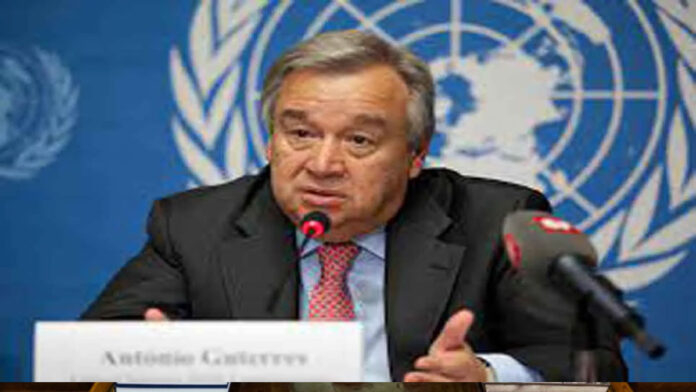
United Nations, New York, June 15, 2026
The US-Iran Peace Agreement has received strong backing from the United Nations, with Secretary-General Antonio Guterres welcoming the announcement of a ceasefire framework between Washington and Tehran and describing it as a significant step toward the peaceful resolution of a conflict that has raised concerns across the Middle East and global energy markets.
According to a statement issued by UN spokesperson Stéphane Dujarric, the Secretary-General views the agreement as an important diplomatic breakthrough that could help reduce regional tensions and create conditions for a broader political settlement.
The agreement reportedly includes an immediate and permanent ceasefire, the reopening of the strategically vital Strait of Hormuz, and the establishment of a framework for continued negotiations between the United States and Iran.
UN Chief Praises Diplomatic Efforts
In the statement, the United Nations highlighted the constructive role played by several regional countries that helped facilitate negotiations leading to the breakthrough.
Secretary-General Guterres commended the diplomatic contributions of Pakistan, Qatar, Egypt, Saudi Arabia, Türkiye, and other regional partners that supported efforts to bring both sides closer to an agreement.
The UN emphasized that multilateral diplomacy and regional cooperation played a critical role in reducing tensions and encouraging dialogue between the two countries.
According to the statement, the Secretary-General hopes that all parties involved will build upon the current momentum and intensify efforts toward a comprehensive and permanent resolution of outstanding disputes.
United Nations Ready to Support Peace Process
The UN also reiterated its willingness to assist all relevant stakeholders in advancing the peace process.
Dujarric stated that the United Nations stands ready to support efforts aimed at achieving a durable, inclusive, and comprehensive peace agreement.
The organization stressed that sustained diplomatic engagement will be essential to ensure the successful implementation of the agreement and prevent future escalations.
International observers have noted that UN support could provide additional legitimacy and institutional backing for any future negotiations between Washington and Tehran.
Trump Announces Completion of Agreement
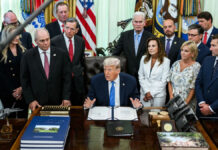
The UN response came shortly after U.S. President Donald Trump announced that a deal had been reached between the United States and Iran.
Posting on his social media platform, Truth Social, Trump declared that the agreement had been completed and congratulated all parties involved in the negotiations.
The President characterized the deal as a major achievement following months of tensions that disrupted maritime trade, affected global energy markets, and raised fears of a broader regional conflict.
Trump stated that the agreement would restore normal shipping operations through the Strait of Hormuz and remove restrictions imposed during the confrontation.
Strait of Hormuz to Reopen
One of the most significant aspects of the US-Iran Peace Agreement is the planned reopening of the Strait of Hormuz.
The narrow waterway is one of the world’s most important energy transit routes, handling a substantial portion of global crude oil exports and liquefied natural gas shipments.
For months, the Strait has remained at the center of geopolitical tensions between Washington and Tehran, with disruptions to maritime traffic contributing to uncertainty in global energy markets.
The reopening of the route is expected to improve shipping security, restore confidence among international traders, and help stabilize global oil supplies.
US Naval Blockade to Be Lifted
President Trump also announced that the United States would immediately remove the naval blockade imposed during the conflict.
According to the President, the decision is intended to restore freedom of navigation and facilitate the uninterrupted movement of commercial vessels through the region.
The lifting of the blockade is expected to benefit international shipping companies, energy producers, and importing nations that rely on Gulf energy supplies.
Economic analysts believe the move could help reduce volatility in energy prices and improve market sentiment worldwide.
Global Energy Markets Closely Watching Developments
The announcement has generated significant attention from governments, businesses, and financial markets around the world.
Because the Strait of Hormuz serves as a critical gateway for global energy exports, any improvement in maritime security has the potential to influence oil prices, transportation costs, and supply chain stability.
Market participants are closely monitoring developments as details of the agreement continue to emerge.
Investors are particularly focused on whether the reopening of the Strait and the removal of naval restrictions can be implemented smoothly and maintained over the long term.
Framework for Future Negotiations
While the ceasefire and maritime provisions have attracted immediate attention, the agreement is also expected to establish a framework for future diplomatic engagement.
Several major issues between Washington and Tehran remain unresolved, including:
- Iran’s nuclear program
- Economic sanctions
- Regional security concerns
- Long-term verification mechanisms
- Future diplomatic normalization efforts
Officials involved in the negotiations have indicated that these matters will likely be addressed through subsequent rounds of talks.
The framework is designed to create an environment conducive to dialogue while reducing the risk of renewed confrontation.
Regional and Global Significance
The US-Iran Peace Agreement could represent one of the most consequential diplomatic developments in the Middle East in recent years.
A successful implementation of the agreement could ease tensions across the region, improve maritime security, support global energy stability, and create opportunities for broader diplomatic engagement.
The involvement of multiple regional mediators highlights the growing importance of collaborative diplomacy in addressing complex international disputes.
For global markets, the reopening of the Strait of Hormuz may help restore confidence in energy supply chains and reduce uncertainty that has affected commodity prices for months.
A Critical Opportunity for Lasting Stability
The endorsement by the United Nations adds international weight to the agreement and underscores the global interest in achieving a peaceful resolution to the long-running tensions between the United States and Iran.
While significant challenges remain, the ceasefire framework and commitment to continued dialogue provide an opportunity for both nations to move away from confrontation and toward diplomacy.
As negotiators prepare for the next phase of talks, the international community will be watching closely to see whether this breakthrough can be transformed into a durable and comprehensive peace arrangement.
Key Highlights
- UN Secretary-General Antonio Guterres welcomed the US-Iran peace agreement.
- The agreement includes an immediate and permanent ceasefire.
- The Strait of Hormuz is expected to reopen for international shipping.
- The United States plans to lift its naval blockade.
- Pakistan, Qatar, Egypt, Saudi Arabia, Türkiye, and other regional states were praised for their diplomatic efforts.
- The UN has pledged support for achieving a lasting and comprehensive peace.