Seoul, South Korea – June 11, 2026
North Korea Denuclearization remains a central objective for both South Korea and the United States, as the two allies on Thursday reaffirmed their shared commitment to eliminating Pyongyang’s nuclear weapons program during a high-level bilateral security meeting in Seoul.
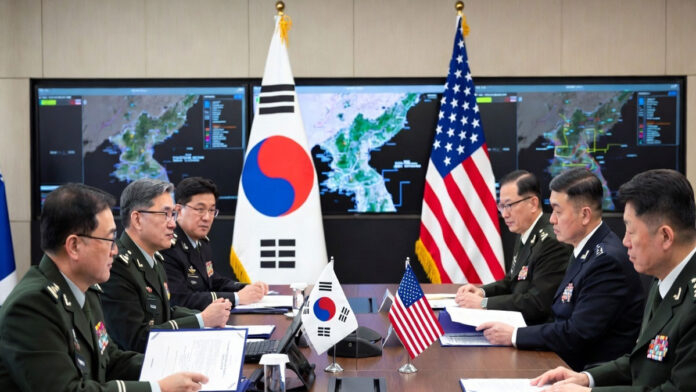
The reaffirmation came during the sixth meeting of the Nuclear Consultative Group (NCG), a key mechanism established to strengthen cooperation between Washington and Seoul in addressing growing nuclear and missile threats from North Korea. The talks were held against the backdrop of Pyongyang’s continued efforts to expand its strategic weapons capabilities and its repeated declarations that it has no intention of abandoning its nuclear arsenal.
The meeting underscored the determination of both governments to maintain a coordinated response to evolving security challenges on the Korean Peninsula while reinforcing the credibility of the US security commitment to South Korea.
Alliance Strengthened Amid Evolving Nuclear Threats
Following the meeting, South Korea and the United States released a joint statement emphasizing the importance of continued cooperation in response to North Korea’s advancing military capabilities.
The statement noted that both sides agreed to further advance the activities of the Nuclear Consultative Group in order to strengthen the alliance and enhance extended deterrence capabilities in the face of North Korea’s rapidly evolving nuclear and missile programs.
The allies reiterated that the complete denuclearization of North Korea remains their common strategic goal despite increasing challenges posed by Pyongyang’s military ambitions and changing regional security dynamics.
Officials stressed that close coordination between the two countries is essential for maintaining peace, stability, and deterrence in Northeast Asia.
High-Level Officials Lead Strategic Security Talks
The latest NCG session was co-chaired by Kim Hong-chul, South Korea’s Deputy Defense Minister for Policy Affairs, and Robert Soofer, the US Deputy Assistant Secretary of Defense responsible for Nuclear Deterrence and Countering Weapons of Mass Destruction.
The discussions focused on strengthening bilateral defense planning, improving crisis response capabilities, and enhancing consultation mechanisms related to nuclear deterrence.
The meeting also provided an opportunity for both countries to review recent developments in North Korea’s weapons programs and assess the broader regional security environment.
Officials emphasized the importance of maintaining regular consultations to ensure that deterrence strategies remain effective and adaptable to emerging threats.
Significance of Denuclearization Reaffirmation
The explicit reference to North Korea Denuclearization attracted particular attention because the issue was notably absent from recent high-level discussions involving North Korean leader Kim Jong-un and Chinese President Xi Jinping.
Analysts have closely monitored diplomatic developments surrounding Pyongyang’s nuclear ambitions, especially as North Korea continues to seek greater international recognition as a nuclear-armed state.
The omission of denuclearization language from recent engagements involving China has fueled speculation among regional observers regarding Beijing’s approach to North Korea’s expanding nuclear program.
By contrast, Thursday’s joint statement from Seoul and Washington delivered a clear and unambiguous message that both allies remain committed to the long-standing objective of a nuclear-free Korean Peninsula.
South Korea, US, and International Partners Maintain Unified Position
The renewed commitment by Seoul and Washington follows similar statements issued by South Korea and the European Union earlier this week.
In their joint declaration, South Korean and European leaders warned that North Korea should never be recognized as a nuclear weapons state under the framework of the Nuclear Non-Proliferation Treaty (NPT).
The statement reflected growing international concerns over North Korea’s continued weapons development activities and its repeated testing of ballistic missile technologies.
Global powers continue to emphasize that any future diplomatic engagement with Pyongyang must be based on international non-proliferation principles and existing United Nations Security Council resolutions.
US Reaffirms Extended Deterrence Commitment
A major focus of Thursday’s discussions involved the United States’ commitment to extended deterrence for South Korea.
Extended deterrence refers to Washington’s pledge to utilize the full range of its military capabilities, including conventional forces, missile defense systems, and nuclear assets, to defend its allies against external threats.
US officials reaffirmed that America remains fully committed to protecting South Korea against potential aggression and maintaining a robust deterrence posture in the region.
This assurance is considered particularly significant given North Korea’s expanding missile inventory and its efforts to develop more sophisticated strategic weapons.
The commitment also serves as a critical pillar of the broader US-South Korea alliance, which has played a central role in regional security for decades.
Focus on Crisis Preparedness and Joint Planning
During the meeting, both sides reviewed joint planning frameworks designed to address potential nuclear contingencies on the Korean Peninsula.
Officials discussed ways to strengthen preparedness measures, improve operational coordination, and integrate South Korea’s conventional military capabilities into broader deterrence strategies involving US nuclear operations.
The consultations also examined various response scenarios and mechanisms intended to improve alliance readiness during periods of heightened tension.
By expanding coordination efforts, both countries aim to ensure a more effective and unified response to future security challenges.
New Security Guidelines Signed
In another important development, South Korea and the United States signed a document establishing security guidelines for protecting sensitive information related to Nuclear Consultative Group activities and consultations.
The agreement is designed to strengthen information security protocols and facilitate deeper cooperation between the two allies on highly classified defense matters.
Officials noted that protecting sensitive strategic information is essential for maintaining the effectiveness and credibility of alliance deterrence initiatives.
Origins of the Nuclear Consultative Group
The Nuclear Consultative Group was established under the Washington Declaration adopted by the leaders of South Korea and the United States in July 2023.
The initiative was created to enhance the credibility of US extended deterrence commitments and provide South Korea with greater involvement in discussions concerning nuclear planning and strategic security issues.
Since its creation, the NCG has become a key platform for bilateral coordination on nuclear deterrence, crisis management, and regional defense strategy.
Regional Security Challenges Continue to Shape Policy
As North Korea continues to expand its nuclear and missile capabilities, South Korea and the United States are intensifying efforts to strengthen deterrence and alliance cooperation.
The latest NCG meeting demonstrates the determination of both governments to maintain a unified front against evolving security threats while continuing to pursue the long-term objective of North Korea Denuclearization.
With geopolitical tensions remaining high across Northeast Asia, the alliance between Seoul and Washington is expected to remain a cornerstone of regional stability and security in the years ahead.
Source: Statements released following the sixth Nuclear Consultative Group (NCG) meeting between South Korea and the United States in Seoul.