NEW DELHI, India — June 10, 2026
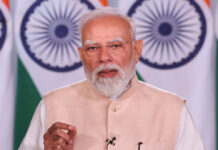
PM Modi Longest-Serving Prime Minister Record became one of the most discussed political milestones in India on Tuesday as Prime Minister Narendra Modi completed 4,399 consecutive days in office, surpassing the continuous tenure record previously held by India’s first Prime Minister, Jawaharlal Nehru.
The achievement prompted congratulatory messages from constitutional authorities, political leaders, industry organizations, and international counterparts, highlighting Modi’s extended tenure at the helm of the world’s largest democracy.
With this milestone, Modi became the longest-serving elected Prime Minister in India’s history in terms of uninterrupted service.
President Droupadi Murmu Congratulates Prime Minister
President Droupadi Murmu extended her congratulations to Prime Minister Narendra Modi through a formal letter acknowledging the historic achievement.
In her message, the President noted that the milestone reflects the confidence repeatedly expressed by the people of India in Modi’s leadership through successive elections.
She also described Modi’s journey from humble beginnings to becoming India’s longest-serving elected Prime Minister as an inspiring example of the strength and inclusiveness of Indian democracy.
According to the President, the achievement highlights one of the most remarkable aspects of the country’s democratic system, where leadership is ultimately determined by the mandate of voters.
Raghav Chadha Calls It a Historic Democratic Moment
Rajya Sabha MP Raghav Chadha described the occasion as a historic moment for Indian democracy.
In a post on social media platform X, Chadha emphasized the complexity and diversity of India’s democratic system, noting that the country is home to more than 1.4 billion people, multiple religions, hundreds of dialects, and a vast range of cultures and communities.
He stated that receiving a mandate from voters on three consecutive occasions—in 2014, 2019, and 2024—represents an extraordinary political achievement in a nation as large and diverse as India.
According to Chadha, winning the trust of voters once is significant, but earning that trust repeatedly across three national elections demonstrates a remarkable level of public confidence.
Industry Leaders Highlight Economic Transformation
India’s leading industry bodies also acknowledged the milestone, linking it to the country’s economic and infrastructure development over the past decade.
The Director General of the Confederation of Indian Industry, Chandrajit Banerjee, congratulated the Prime Minister on completing 12 years of what he described as transformational leadership.
Banerjee said India has emerged as one of the world’s leading economies and has developed into a more confident global voice during this period.
He pointed to progress in infrastructure development, entrepreneurship, innovation, social development, and economic reforms as key factors contributing to India’s growth trajectory.
Meanwhile, Federation of Indian Chambers of Commerce and Industry President Anant Goenka said the country’s economic foundations have strengthened significantly over the past 12 years.
According to Goenka, reforms focused on ease of doing business, infrastructure investment, manufacturing competitiveness, and global trade partnerships have contributed to India’s economic transformation and enhanced its international standing.
International Leaders Send Congratulations
The milestone also drew recognition from leaders beyond India’s borders.
Prime Minister Tshering Tobgay sent a congratulatory message acknowledging Modi’s record-setting tenure and continued leadership.
South Korean President Lee Jae-myung also extended congratulations, praising Modi’s role in leading India’s development and strengthening the country’s position within the international community.
Diplomatic observers noted that such messages reflect India’s growing influence in global affairs and the importance many nations attach to their relationship with New Delhi.
A Landmark in Indian Political History
Modi first assumed office as Prime Minister in May 2014 and subsequently secured electoral victories in 2019 and 2024, enabling him to continue serving without interruption.
His latest milestone places him ahead of Jawaharlal Nehru’s continuous tenure record and adds another chapter to India’s political history.
Political analysts note that maintaining public support across three consecutive general elections is a rare achievement in a democratic system characterized by intense electoral competition and significant regional diversity.
Significance Beyond the Numbers
Beyond the numerical record, the milestone has reignited discussions about leadership continuity, governance reforms, economic development, infrastructure expansion, and India’s evolving role on the world stage.
Supporters view the achievement as a reflection of sustained public confidence, while observers across the political spectrum acknowledge the significance of such a long and uninterrupted democratic mandate.
As India continues to navigate economic, geopolitical, and technological changes, the Prime Minister’s record tenure is expected to remain a notable reference point in discussions about contemporary Indian politics.
Conclusion
The PM Modi Longest-Serving Prime Minister Record has generated widespread recognition from political leaders, constitutional authorities, industry representatives, and international counterparts. As congratulatory messages continue to arrive from across India and around the world, the milestone stands as a significant moment in the country’s democratic and political history, reflecting more than a decade of uninterrupted leadership at the national level.