MOSCOW, RUSSIA — June 8, 2026
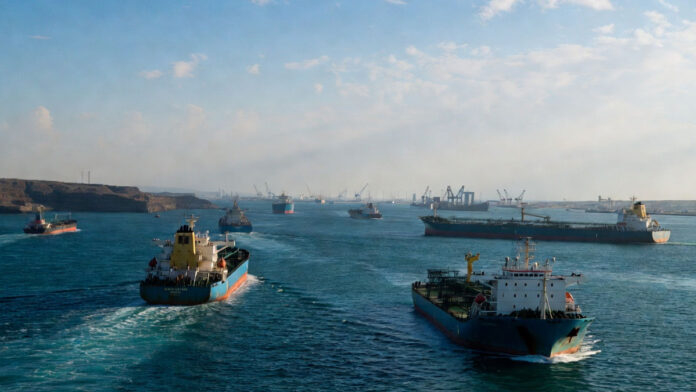
Strait of Hormuz Update developments have drawn international attention after Iran’s Ambassador to Russia, Kazem Jalali, stated that the strategically vital waterway will remain open but could operate under revised conditions that may include transit-related charges.
Speaking in an interview with the Russian newspaper Izvestia, published Monday, Jalali said that Iran has no intention of shutting down the Strait of Hormuz despite ongoing tensions across the Middle East. However, he indicated that changes in the regional security environment may require a new framework for managing maritime traffic through the narrow passage.
“The strait will certainly remain open, but its future operating conditions will be determined by the authorities of Iran and Oman,” Jalali said.
New Operational Framework Under Consideration
According to the ambassador, Iran and Oman are evaluating a revised management structure for the waterway, which serves as one of the world’s most critical maritime trade and energy corridors.
Jalali suggested that vessels using the route could be subject to service-related fees in the future, although he did not provide details regarding possible charges or implementation timelines.
“We understand that Iran and Oman provide certain services related to the strait, and fees may be charged for those services,” he said.
The remarks come at a time when global markets remain sensitive to any developments involving the Strait of Hormuz, through which a significant portion of the world’s crude oil and liquefied natural gas shipments transit.
Iran Rejects Using Waterway as a Pressure Tool
Despite speculation surrounding potential restrictions, Jalali emphasized that Tehran does not seek to use the strategic passage as a geopolitical pressure instrument.
He argued that regional realities have evolved in recent months and that updated administrative arrangements are being considered in response to changing circumstances rather than as a punitive measure.
According to the ambassador, management of the strait falls within the jurisdiction of Iran and Oman, and any decisions regarding operational changes are being discussed exclusively between the two neighboring countries.
Regional Security Environment Has Changed
Jalali noted that the waterway has remained accessible to international shipping for decades. However, he maintained that recent regional tensions have altered the security landscape and necessitated a reassessment of existing arrangements.
While reiterating that Iran does not intend to close the route, he stated that authorities must take current developments into account when formulating future policies.
The comments come amid continued instability across the Middle East, where military confrontations and diplomatic disputes have heightened concerns over regional security and the safety of critical trade routes.
Iran Wants Russia Involved in Diplomatic Efforts
The ambassador also addressed diplomatic initiatives related to the broader Middle East conflict.
According to Jalali, Iran favors a greater role for Russia in efforts aimed at resolving regional disputes and facilitating negotiations among key stakeholders.
He claimed that Tehran supports Moscow’s participation in diplomatic discussions, while the United States is reportedly less inclined to expand the process to include additional international actors.
“Iran would like Russia to be involved in negotiations connected to resolving the Middle East conflict,” he said.
Leadership Stability in Iran
Responding to ongoing speculation surrounding Iran’s political leadership, Jalali dismissed suggestions of instability within the country’s governing structure.
He stated that the leadership remains firmly in place and that state institutions continue to function normally. According to the ambassador, policy decisions and administrative processes are proceeding without disruption despite the heightened regional tensions.
Global Attention on the Strait
The Strait of Hormuz remains one of the most strategically significant waterways in the world, linking the Persian Gulf to international shipping lanes. Any policy changes affecting the route are closely monitored by governments, energy companies, shipping operators, and financial markets.
While Iran’s latest remarks indicate that the strait will remain open, proposed operational changes and potential transit fees could become an important topic in future discussions surrounding regional trade, maritime security, and global energy supplies.