New Delhi, India — May 17, 2026
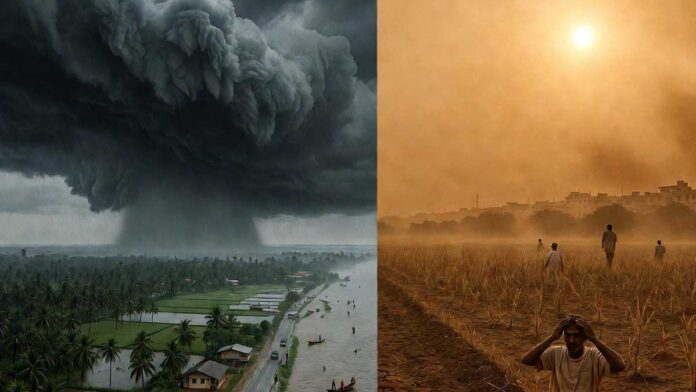
India could witness sharply contrasting weather conditions during the 2026 monsoon season, with severe drought risks emerging across northern and central regions while southern coastal states face the possibility of intense flooding, according to weather experts and forecasts from the India Meteorological Department.
The southwest monsoon is expected to arrive over Kerala around May 26, nearly four days earlier than its usual onset date, the weather department said. However, scientists have warned that the rapid development of a strong El Niño in the Pacific Ocean could significantly weaken seasonal rainfall across large parts of India.
El Niño Could Trigger Weak Monsoon Across Key Agricultural Regions
Meteorologists say the strengthening El Niño pattern is likely to reduce monsoon rainfall between June and September, particularly across North and Central India. The phenomenon is known for weakening southwest monsoon winds, often resulting in below-normal rainfall and drought-like conditions.
States such as Punjab, Haryana, western Uttar Pradesh, Rajasthan, and parts of central India are expected to face the greatest impact. Experts also warned that Delhi-NCR could experience a double crisis of prolonged heatwaves and water stress during the summer and monsoon period.
India receives nearly 70% of its annual rainfall during the monsoon season, making seasonal rains critical for agriculture, water reserves, and rural livelihoods. Reduced rainfall could affect crop production, food prices, electricity generation, and the broader economy.
Southern Coastal States Face Flood Threat
While northern regions may struggle with rainfall shortages, coastal states in southern India could face the opposite problem. Weather experts warned of possible heavy rainfall and flood risks in states such as Tamil Nadu and Andhra Pradesh due to changing oceanic and atmospheric patterns.
According to the IMD, monsoon conditions are currently advancing over the South Bay of Bengal, the Andaman Sea, and parts of the Andaman and Nicobar Islands, with conditions remaining favorable for further progress toward the Kerala coast.
Indian Ocean Dipole May Offer Some Relief
Climate scientists noted that the Indian Ocean Dipole (IOD) could partially offset the negative impact of El Niño later in the monsoon season.
Forecast models suggest the IOD may turn positive during the final phase of the monsoon. If that happens, it could strengthen monsoon winds and improve rainfall activity in some regions during the later months of the season.
IMD Plans to Revise Heatwave Criteria
Amid rising temperatures and changing weather patterns, the IMD is also preparing to revise the criteria used to officially declare heatwave conditions in India.
Officials said the current standards no longer fully reflect India’s changing climatic realities. This summer has already brought extreme heat and humidity across several regions, while unusual cyclonic systems near the Karnataka-Maharashtra coast have forced meteorologists to adapt forecasting models.
Authorities noted that such cyclonic developments near southern coastal areas were previously uncommon, highlighting the growing complexity of India’s weather systems.
Rainfall Expected Below Long-Term Average
According to IMD projections, India’s monsoon rainfall this year may remain at only 92% of the Long Period Average (LPA), placing it in the “below normal” category.
Based on rainfall data collected between 1971 and 2020, India’s average annual monsoon rainfall should reach approximately 870 millimeters. However, experts now estimate a 35% probability of drought conditions developing this season — more than double the risk seen during normal years.
Scientists expect El Niño conditions to become fully active by June or July, potentially intensifying weather disruptions across the country.
Uttar Pradesh Continues to Reel Under Extreme Heat
Several parts of Uttar Pradesh continued to record dangerously high temperatures on Saturday, with most districts witnessing maximum temperatures above 40 degrees Celsius.
Banda recorded the highest temperature in the state at 44.8°C, followed by Jhansi at 44.1°C and Prayagraj at 44°C. Agra registered 43°C, while Ghazipur recorded 42°C. Temperatures at Varanasi Airport reached 41.3°C, reflecting the ongoing severe heatwave conditions across northern India.