New Delhi, India — May 13, 2026
Iran’s Deputy Foreign Minister Kazem Gharibabadi arrived in New Delhi on Wednesday for high-level diplomatic discussions with Indian officials amid escalating tensions in West Asia and growing international concerns over regional security and energy stability.
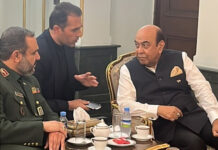
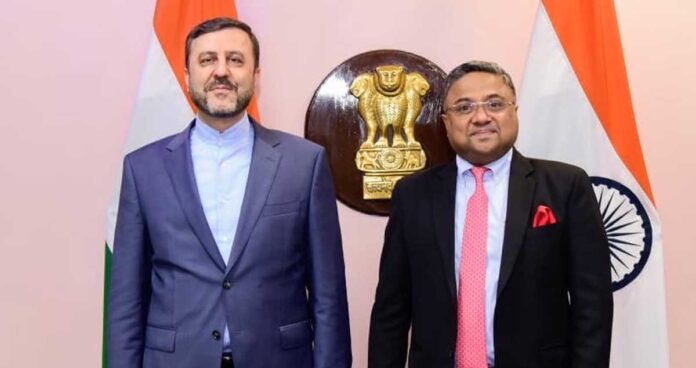
Gharibabadi was welcomed at the Ministry of External Affairs by Sibi George, Secretary (West) in India’s Foreign Ministry. The two sides held detailed discussions covering bilateral relations, regional developments, and recent geopolitical events impacting West Asia.
The Indian Foreign Ministry later shared photographs of the meeting on social media platform X, confirming that both delegations discussed key bilateral and regional issues, including recent developments in the Middle East.
India-Iran Strategic Dialogue Continues
The latest diplomatic engagement reflects the deep and longstanding relationship between India and Iran, which has historically been shaped by cultural ties, strategic cooperation, and mutual geopolitical interests.
Over the past several months, communication between senior Indian and Iranian leaders has intensified due to the rapidly evolving security situation in West Asia.
Since late February, Indian External Affairs Minister S. Jaishankar has reportedly held multiple phone conversations with his Iranian counterpart Seyed Abbas Araghchi following heightened regional instability triggered by joint US-Israeli airstrikes targeting locations in and around Tehran and other Iranian cities.
The continued diplomatic exchanges underline New Delhi’s efforts to maintain close coordination with Tehran while monitoring developments that could affect regional stability, maritime security, and global energy markets.
Jaishankar and Araghchi Held Detailed Discussions
Last month, Jaishankar received a phone call from Iranian Foreign Minister Araghchi during which both sides held what Indian officials described as an “extensive discussion” on the ongoing West Asia conflict and bilateral cooperation.
On April 29, Jaishankar publicly confirmed the conversation through a post on X, stating that he had discussed the “current situation in detail” with the Iranian Foreign Minister and that both sides agreed to remain in close contact.
The Iranian Embassy in India later issued its own statement confirming that the ministers had discussed ceasefire efforts, bilateral relations, and broader regional and international developments.
Diplomatic observers believe these repeated high-level engagements indicate the strategic importance both countries attach to maintaining open communication channels during periods of regional uncertainty.
PM Modi Also Held Talks With Iranian President
The diplomatic outreach between New Delhi and Tehran has also included direct communication at the leadership level.
On March 21, Prime Minister Narendra Modi held a phone conversation with Iranian President Masoud Pezeshkian, during which he expressed concern over the worsening crisis in West Asia.
According to official statements, Prime Minister Modi condemned attacks on critical infrastructure in the region and emphasized the importance of keeping international shipping lanes open and secure.
The Indian Prime Minister also highlighted the importance of maritime safety and uninterrupted navigation, issues that have become increasingly sensitive amid rising tensions near the Strait of Hormuz.
The two leaders had previously spoken on March 12, when Modi stressed the need for diplomacy and dialogue to resolve regional disputes peacefully.
Growing Concerns Over Strait of Hormuz Security
Gharibabadi’s visit comes at a particularly sensitive time as global attention remains focused on security concerns surrounding the Strait of Hormuz, one of the world’s most strategically important maritime trade routes.
A significant percentage of global oil exports pass through the narrow waterway, making stability in the region crucial for international energy markets and global trade.
India, as one of the world’s largest energy importers, closely monitors developments affecting maritime security in the Gulf region.
Any disruption in shipping lanes or escalation of conflict in West Asia has the potential to directly impact fuel prices, trade routes, and broader economic stability across Asia.
Analysts believe India’s continued diplomatic engagement with Iran reflects New Delhi’s strategic interest in preserving regional balance while safeguarding energy and trade interests.
Who Is Kazem Gharibabadi?
Kazem Gharibabadi is considered one of Iran’s senior diplomats and has frequently represented Tehran in matters involving international law, human rights, nuclear diplomacy, and regional strategic affairs.
Over the years, he has served in multiple diplomatic and legal roles tied to Iran’s engagement with international institutions and global diplomatic forums.
His visit to India is viewed as part of Tehran’s broader effort to strengthen ties with major regional powers amid increasing geopolitical tensions and shifting global alliances.
Experts note that India and Iran continue to maintain active dialogue despite international geopolitical complexities and sanctions-related challenges affecting the region.
India-Iran Relations Remain Strategically Important
India and Iran share longstanding cooperation across sectors including energy, connectivity, trade, regional security, and multilateral diplomacy.
The relationship also holds significance in the context of BRICS and other regional diplomatic platforms where both nations often engage on issues involving global governance, trade corridors, and emerging geopolitical challenges.
Strategic projects such as the Chabahar Port continue to remain important components of bilateral cooperation, particularly for India’s connectivity interests in Central Asia and Afghanistan.
Diplomatic experts say continued engagement between New Delhi and Tehran demonstrates both countries’ intention to preserve stable relations despite rising turbulence across West Asia.
Regional Diplomacy Under Global Spotlight
The meeting between Gharibabadi and Indian officials is being closely watched as governments worldwide attempt to navigate increasing geopolitical instability in the Middle East.
Regional conflicts, maritime security threats, energy concerns, and global economic uncertainty have elevated the importance of diplomatic coordination among major Asian powers.
India has consistently maintained that dialogue, de-escalation, and diplomacy remain the best path forward for resolving regional crises.
With tensions continuing across multiple fronts in West Asia, the India-Iran diplomatic channel is expected to remain active in the coming weeks.