Washington, D.C. / Florida — May 2, 2026
U.S. President Donald Trump on Friday strongly defended recent military action targeting Iran’s nuclear program, arguing it was necessary to prevent a broader global catastrophe.
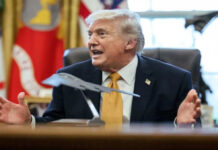
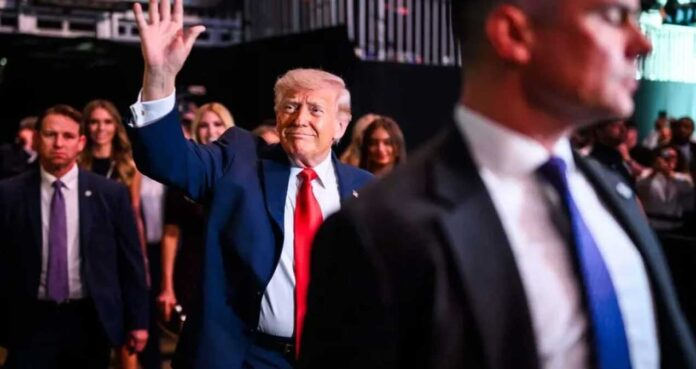
Speaking at a school event in Florida, Trump said that if Iran had successfully developed nuclear weapons, the consequences would have been devastating for Israel, the Middle East, and Europe.
“If Iran had obtained nuclear weapons, Israel, the Middle East, and even Europe could have been shattered,” Trump said, framing the strike as a preemptive move to avert large-scale destruction.
B-2 Bombers Used to Halt Nuclear Progress
Trump revealed that the United States deployed Northrop Grumman B-2 Spirit bombers in the operation, describing the strike as decisive in stopping Iran from advancing its nuclear weapons capability.
According to the president, the mission successfully disrupted Iran’s path toward nuclear armament, reinforcing Washington’s long-standing stance against nuclear proliferation.
Claims Iran’s Military Capability Has Been Weakened
In his remarks, Trump claimed that Iran’s military strength has been significantly degraded following the strike.
“They have no navy left, no air force left, and their radar and anti-air systems are gone,” he said, adding that Iran’s leadership has also been weakened and lacks cohesion.
While these claims could not be independently verified, they reflect the administration’s assessment of the impact of recent operations.
US Will Not Back Down Amid Ongoing Tensions
Trump also addressed ongoing diplomatic efforts with Tehran, expressing dissatisfaction with recent proposals from Iran aimed at resolving the conflict.
“They want a deal, but it’s not the deal we want,” he said, indicating that negotiations remain at an impasse.
He further pointed to internal divisions within Iran’s leadership, suggesting that competing factions may be complicating the negotiation process.
“The leadership is very disorganized. There are multiple groups, and that makes it harder to reach a solid agreement,” Trump noted.
The president made it clear that the United States would not rush to disengage from the conflict. “We’re not leaving quickly,” he said. “We don’t want this problem coming back in a few years.”
Fuel Prices Linked to Conflict Outcome
Before departing for Florida, Trump also addressed concerns about rising fuel prices, acknowledging that gasoline costs remain elevated.
“Gas prices are high right now, but other costs are coming down,” he said, adding that energy markets could stabilize once the conflict ends.
Trump expressed confidence that resolving the Iran crisis and eliminating the nuclear threat would eventually lead to lower fuel prices.
High-Stakes Standoff Continues
As tensions between Washington and Tehran persist, Trump’s remarks highlight a critical juncture in U.S.-Iran relations. The administration’s firm stance on military action and unwillingness to accept a partial agreement signals a prolonged and complex geopolitical standoff.
With nuclear security, regional stability, and global energy markets all at stake, the path forward remains uncertain.