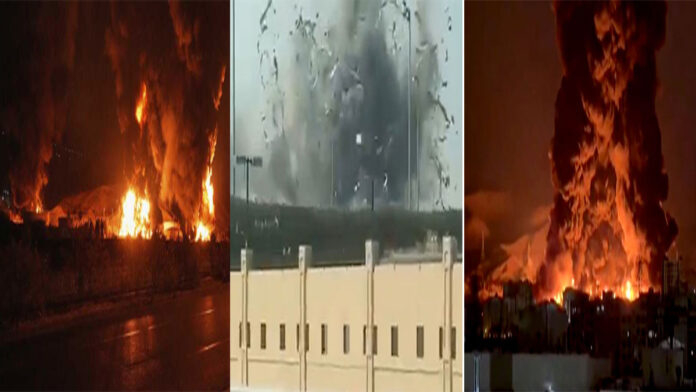
Dubai, UAE | March 27, 2026
Tensions across the Middle East surged sharply early Friday after Iran launched a new wave of coordinated missile and drone strikes targeting Israel and U.S. military bases in the Gulf, signaling a dangerous escalation in the ongoing regional conflict.
According to Iranian state-linked media, the Islamic Revolutionary Guard Corps (IRGC) initiated the 83rd phase of “Operation True Promise 4,” deploying advanced ballistic missiles and suicide drones in a multi-front offensive.
Strikes Hit Israeli Energy Infrastructure
Iranian sources claimed that key energy infrastructure in the Israeli port city of Ashdod was targeted, including a major oil depot. Reports indicate that the strikes triggered fires at the facility, although independent verification remains limited.
Additional strikes were reportedly carried out on Israeli military installations, with Iranian officials asserting “precision targeting” of strategic assets.
U.S. Military Bases in Gulf Targeted
In a significant escalation, Iran expanded its offensive beyond Israel, directly targeting U.S. military infrastructure in the Gulf region.
Missile strikes were reported at:
- Ali Al-Salem Air Base in Kuwait
- Sheikh Isa Air Base in Bahrain
Sources suggest that critical infrastructure in Bahrain, including Patriot missile system repair hangars and jet fuel storage tanks, sustained heavy damage.
Additionally, drone attacks were reported at Al Dhafra Air Base in the UAE, where military equipment was allegedly hit.
Retaliation After Senior Military Death
The latest strikes are widely seen as retaliation following the reported killing of senior Iranian naval commander Rear Admiral Alireza Tangsiri in a recent Israeli attack.
The escalation comes amid a broader regional crisis that intensified after the reported death of Iran’s Supreme Leader Ayatollah Ali Khamenei on February 28, 2026—an event that has further destabilized the geopolitical landscape.
Global Oil Supply at Risk
The conflict is now raising alarm across global markets. Iran has reportedly moved to restrict traffic through the Strait of Hormuz, a critical chokepoint for global oil shipments.
Analysts warn that prolonged disruption could trigger:
- Severe oil supply shortages
- Sharp spikes in global energy prices
- Broader economic instability
While the United States has reportedly urged restraint, including calls to avoid targeting oil infrastructure until early April, developments on the ground suggest a rapidly deteriorating situation.
Outlook
With attacks expanding across multiple countries and critical infrastructure increasingly targeted, the risk of a wider regional war is growing. Defense analysts caution that unless diplomatic efforts intensify immediately, the conflict could spiral into a full-scale international crisis with far-reaching economic consequences.