Tehran/Dubai – March 17, 2026
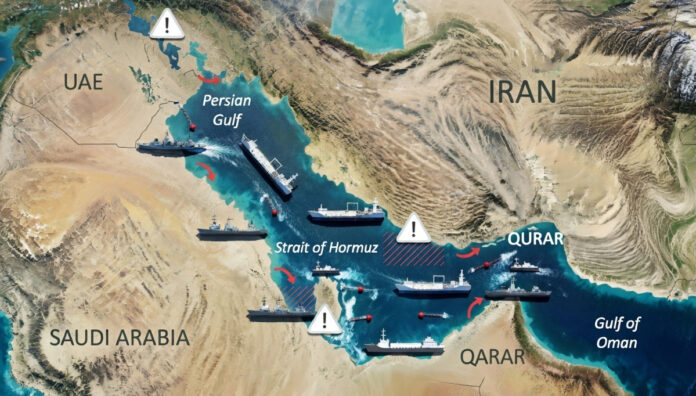
The ongoing conflict in West Asia involving Iran, the United States, and Israel has entered its third week, with no signs of de-escalation. In a major development, Iran has further tightened control over the Strait of Hormuz, a critical global shipping route for oil transportation.
The move has raised serious concerns about global energy supplies and the stability of international markets.
Strait of Hormuz: Restricted Access for Rival Nations
Iran has effectively limited access through the Strait of Hormuz, allowing passage only under specific conditions. According to statements attributed to Iran’s Foreign Ministry spokesperson Esmail Baghaei, the route remains open for “friendly nations” but restricted for countries considered adversaries.
Tehran has emphasized that ships will only be permitted to pass under “special circumstances,” with Iran’s armed forces maintaining control over the strategic waterway.
Impact on Global Oil Supply
The Strait of Hormuz handles nearly one-fifth of the world’s oil shipments. Any disruption in this route has immediate global consequences.
Recent restrictions have already triggered a sharp rise in oil prices, as markets react to fears of prolonged supply disruptions.
Recent Military Developments in the Region
Tensions escalated further after reported attacks targeting key locations in the Gulf region:
A drone strike near Dubai International Airport reportedly caused a major fire in a fuel storage facility
US military bases and energy infrastructure in Gulf countries were also targeted
These developments have intensified concerns over regional security and economic stability.
Civilian Impact Inside Iran
Reports indicate that overnight strikes in Iran’s Markazi province resulted in casualties and damage to civilian infrastructure:
Five people were killed and seven injured
Residential areas near Arak city were affected
A school building in Khomein was also reportedly targeted
The incidents highlight the growing humanitarian impact of the ongoing conflict.
Selective Passage: India Among Allowed Nations
In recent days, Iran reportedly allowed two Indian vessels to pass through the Strait of Hormuz, indicating a selective approach toward maritime access based on diplomatic relations.
Rising Global Concerns
The continued escalation has heightened fears of a broader regional crisis. Analysts warn that prolonged disruption in the Strait of Hormuz could have far-reaching implications for global trade, energy prices, and geopolitical stability.
Conclusion
As the Iran-US-Israel conflict enters its third week, tightening restrictions in the Strait of Hormuz have added a new layer of complexity to the crisis. With oil markets reacting sharply and regional tensions rising, the situation remains highly volatile.