Washington, D.C., United States — March 12, 2026
The United States Supreme Court decision to overturn a previous tariff arrangement has prompted the United States government to launch a new trade investigation targeting foreign manufacturing policies.
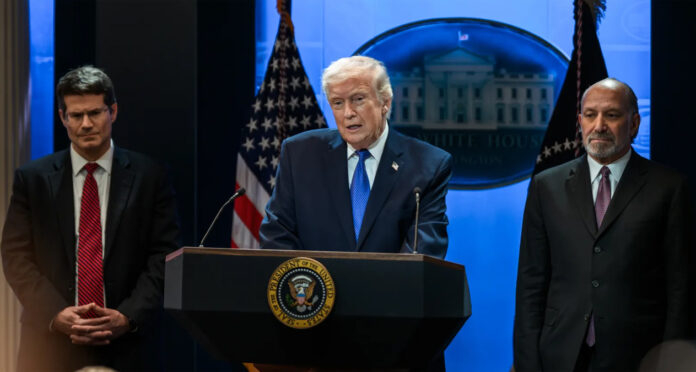
The move by the Trump administration is widely seen as an effort to offset billions of dollars in lost tariff revenue following the court’s ruling.
On Wednesday, U.S. authorities initiated the probe under Section 301 of the Trade Act of 1974, a legal mechanism that allows Washington to investigate foreign trade practices and potentially impose new import tariffs if those practices are deemed harmful to American industries.
Section 301 Investigation Targets Foreign Industrial Policies
Speaking to reporters, Jamieson Greer, the Office of the United States Trade Representative official overseeing the process, said the administration’s overall policy direction remains unchanged.
However, he indicated that the tools used to enforce trade policy may evolve.
“The administration’s priority continues to be protecting American industries and jobs,” Greer said, noting that the new investigation would assess how foreign industrial policies affect U.S. manufacturers.
The inquiry will examine issues such as:
Industrial subsidies
Wage suppression policies
Persistent trade surpluses with the United States
Market practices that may disadvantage American companies
Multiple Countries Under Review
The investigation is expected to examine policies from several major U.S. trading partners, including:
China
European Union
Singapore
Switzerland
Norway
Indonesia
Malaysia
Cambodia
Thailand
South Korea
Vietnam
Taiwan
Bangladesh
Mexico
Japan
India
U.S. officials say the review will determine whether policies in these countries provide unfair advantages to foreign manufacturers at the expense of American companies.
Potential Impact on Global Trade
Economists warn that if the investigation leads to new tariffs or trade restrictions, global trade tensions could rise again.
Previous tariff measures implemented by the United States led to economic disputes with several trading partners, affecting supply chains and international markets.
While Greer emphasized that previously announced trade frameworks remain separate from the current probe, he acknowledged that those agreements may still influence future decisions.
Additional Investigation Into Forced Labor Imports
Alongside the Section 301 inquiry, the administration has also announced another investigation focused on imports linked to forced labor.
The goal is to evaluate whether additional restrictions should be imposed on goods produced under coercive labor conditions.
Officials also indicated that future investigations could examine other trade-related issues, including:
Digital services taxes
Pharmaceutical pricing policies
Maritime pollution regulations
Temporary Tariffs and Policy Timeline
Currently, the United States has imposed a temporary 10% tariff on certain foreign goods under Section 122 trade powers.
This measure is scheduled to expire after 150 days on July 24.
Previously, Donald Trump suggested that the tariff could be increased to 15%, although no formal implementation has been announced yet.
According to Greer, the administration aims to complete the investigation as quickly as possible and present policy options to the president, allowing the government to determine its next steps in shaping U.S. trade policy.