San Francisco, United States — March 8, 2026
Two of the world’s largest smartphone makers—Apple and Samsung Electronics—have announced a groundbreaking communication feature that could redefine mobile video calls.
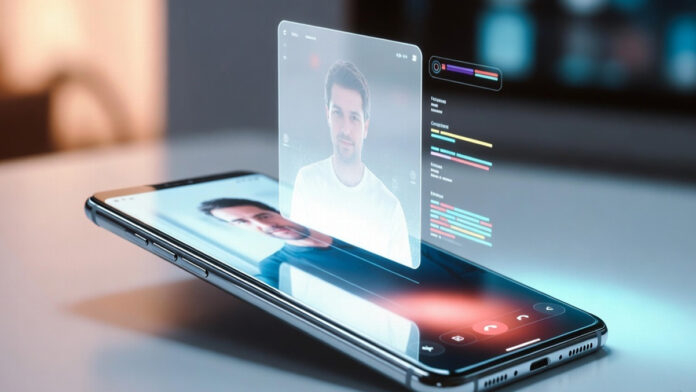
The companies revealed plans for a “Real-Time Language Hologram” system, which will allow users to see a 3D holographic projection of the person they are speaking with during a video call.
The technology is expected to appear in upcoming flagship smartphones such as the iPhone 17 Pro and Samsung Galaxy S26 Ultra.
Industry experts say the feature could represent one of the most significant innovations in smartphone communication in years.
How the Technology Works
LiDAR and AI Sensors
The new system relies on advanced LiDAR sensors and AI-powered motion mapping. These sensors capture a user’s facial expressions, gestures, and body movements in real time and convert them into a three-dimensional digital model.
Holographic Projection
A miniature nano-projector located near the front camera will project a transparent 3D hologram of the caller slightly above the smartphone screen.
This projection will allow users to interact with what appears to be a floating holographic image during a call.
Real-Time Language Translation
One of the most advanced aspects of the technology is its live language translation system.
AI-Powered Voice Translation
If one user speaks Hindi and the other speaks Japanese, the AI system will automatically translate the speech in real time.
Lip-Sync Adjustment
The system also adjusts the hologram’s lip movements to match the translated language, creating a more natural conversation experience.
Emotion Detection
Advanced voice analysis will detect emotional cues in speech—such as happiness or concern—and reflect those expressions on the holographic face.
Integration With Other Devices
Apple is expected to integrate the feature with its mixed-reality ecosystem, including the Apple Vision Pro headset.
This could allow users to hold immersive virtual experiences such as remote meetings or even virtual dinners with friends and family.
Samsung, meanwhile, hinted at a possible “Galaxy Beam 2.0” holographic dock, which could enlarge the hologram projection for a more immersive viewing experience.
Expected Launch Timeline
Both companies indicated that the beta version of the feature could roll out around September 2026 for select flagship devices.
The technology may initially be available through software updates before expanding to broader device ecosystems.
Potential Impact on Communication and Business
Technology analysts say holographic communication could transform remote work, international business meetings, and long-distance social interactions.
Instead of traveling for meetings, individuals may be able to attend events through a life-sized holographic presence, reducing travel costs and time.