
New Delhi, India – February 23, 2026
Israel is planning to expand its bilateral defense agreement with India, including potential technology sharing and local manufacturing of advanced military systems, Israel’s Consul General to Midwest India said Monday.
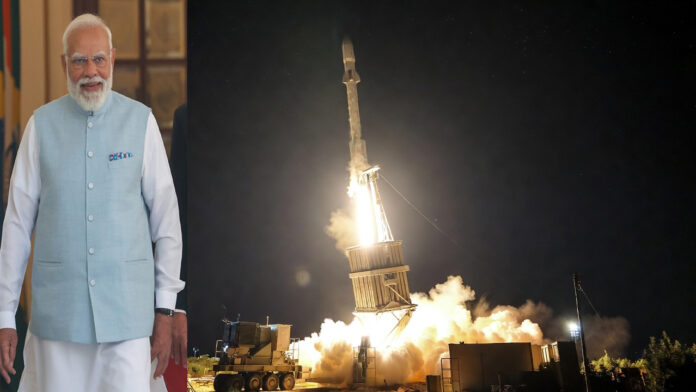
Yaniv Revach, speaking in an interview with IANS ahead of Prime Minister Narendra Modi’s upcoming visit to Israel, said the two nations are looking to deepen cooperation in defense and advanced security systems.
Revach noted that Israeli Prime Minister Benjamin Netanyahu has identified defense collaboration as a key pillar of the visit. “We will certainly work to promote and upgrade defense cooperation with India,” he said.
Focus on Technology Sharing and Manufacturing
According to Revach, both countries already maintain a strong and unique defense partnership due to shared security challenges. During Modi’s visit, discussions are expected to focus on expanding the agreement into specific areas, including joint manufacturing in India.
He indicated that Israel may share advanced technologies, including systems related to the Iron Dome, allowing production in collaboration with Indian partners.
Broader Regional Alignment
Revach also stated that Israel is interested in building a broader strategic coalition with India, countries that are part of the Abraham Accords, select African nations, as well as Cyprus and Greece. He suggested that Modi’s visit could help advance this initiative aimed at countering extremist threats in the region.
What Is the Iron Dome System?
The Iron Dome is widely regarded as one of Israel’s most critical air defense systems. When a rocket enters protected airspace, radar units detect it and a command system calculates whether it poses a threat to populated areas. If necessary, an interceptor missile is launched to destroy the projectile mid-air.
The system has been used extensively to intercept short-range rockets and artillery fire, including thousands launched from Gaza in past conflicts. However, it is primarily designed for short-range threats. Long-range ballistic missiles, high-speed projectiles, drones, or aircraft may fall outside its optimal interception range. Additionally, during sustained heavy barrages, interceptor supplies can be strained.