Washington, D.C. — February 20, 2026
Did tariffs stop a war? Donald Trump says he prevented an India-Pakistan conflict by threatening massive trade penalties. The claim is drawing attention globally, as neither country has confirmed the account. Here’s what he said and why it matters.
🇺🇸 Trump’s Claim on India-Pakistan Tensions
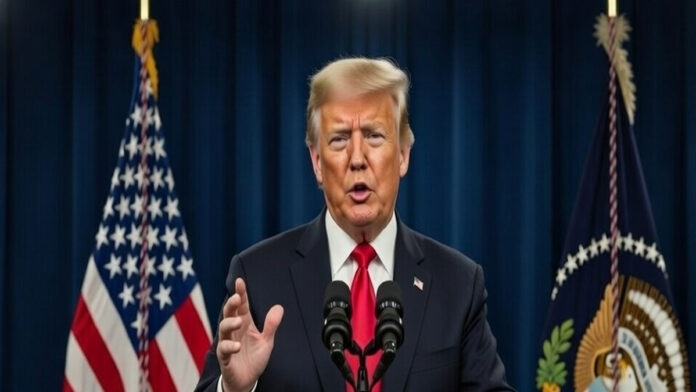
Speaking while hosting a meeting of what he described as a “Board of Peace,” Trump referenced tensions between the two nuclear-armed neighbors last year and suggested economic pressure played a decisive role in de-escalation.
“I told them if you keep fighting, I’ll put 200% taxes on both of you. When money was involved, they stopped,” Trump said, according to remarks from the event.
📊 Context Behind the Statement
Trump’s comments come amid ongoing global attention on geopolitical flashpoints and US diplomatic positioning in South Asia. India and Pakistan have a long history of disputes, particularly over Kashmir, and any suggestion of outside intervention or mediation often draws scrutiny from analysts and officials.
There has been no immediate official confirmation from New Delhi or Islamabad regarding Trump’s claim.
🌍 Why the Remark Matters
1. Economic Leverage as Diplomacy
Trump’s statement highlights his long-standing approach of using trade pressure as a foreign policy tool.
2. Regional Sensitivity
India traditionally opposes third-party mediation in its disputes with Pakistan, making such claims diplomatically sensitive.
3. Global Strategic Signal
The remark may be interpreted as a signal about how Washington could approach future conflicts — emphasizing economic measures alongside military or diplomatic channels.
🧭 Analyst Perspective
Foreign policy experts often caution that statements about conflict mediation can be politically charged and may not fully reflect behind-the-scenes diplomatic processes. They note that de-escalation between rival states typically involves multiple factors, including back-channel talks, military calculations, and international pressure.