Tehran, Iran — February 9, 2026
Iran has reaffirmed its hardline position on uranium enrichment and rejected what it described as intimidation through military deployments, even as nuclear talks with the United States resumed on Sunday.
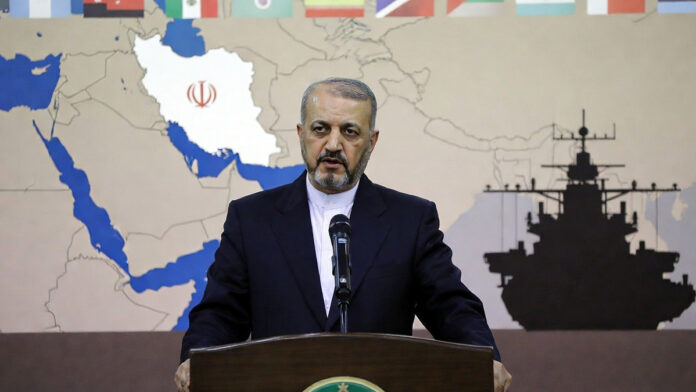
Speaking at a public event, Abbas Araghchi said that increased US military presence in the region would not deter Tehran from pursuing what it considers its sovereign rights.
⚠️ ‘Military Deployments Do Not Frighten Us’
Araghchi’s remarks came shortly after the United States deployed its most powerful aircraft carrier, the USS Abraham Lincoln, to West Asia.
“Military deployments in the region do not frighten us,” Araghchi said, adding that Iran has very little trust in the United States and remains skeptical about Washington’s true intentions behind the talks.
❓ Doubts Over US Intentions
The Iranian foreign minister questioned whether the United States is genuinely committed to diplomacy.
He said Iran is consulting closely with its strategic partners, China and Russia, as negotiations proceed.
“We are not convinced that the US is serious about negotiations,” Araghchi stated, underscoring Tehran’s cautious approach to the dialogue process.
☢️ Iran Rejects Nuclear Weapons Claims
Western countries and Israel have long accused Iran of seeking to develop nuclear weapons — allegations Tehran has consistently denied.
Araghchi reiterated that Iran is not pursuing a nuclear bomb.
“They fear our nuclear bomb, while we are not seeking one,” he said. “Our real power is the ability to say no to major powers.”
🚫 No Compromise on Uranium Enrichment
Iran also ruled out any agreement that would limit its uranium enrichment program. Araghchi stressed that enrichment is a matter of national sovereignty, not a bargaining chip.
“Even if war is imposed on us, no one has the right to dictate our rights,” he said.
The United States and Israel have pushed for negotiations to include Iran’s ballistic missile program and its support for armed groups in the region, but Iran has firmly rejected expanding the scope of the talks beyond nuclear issues.
🌐 Rising Regional Tensions
Meanwhile, Israeli Foreign Minister Gideon Sa’ar described Iran’s nuclear program as a threat to global peace, highlighting the deep divisions surrounding the negotiations.
Analysts say Iran’s latest statements signal that while talks may continue, significant breakthroughs remain unlikely unless core positions on enrichment and regional security change.