
Washington, D.C. — January 27, 2026
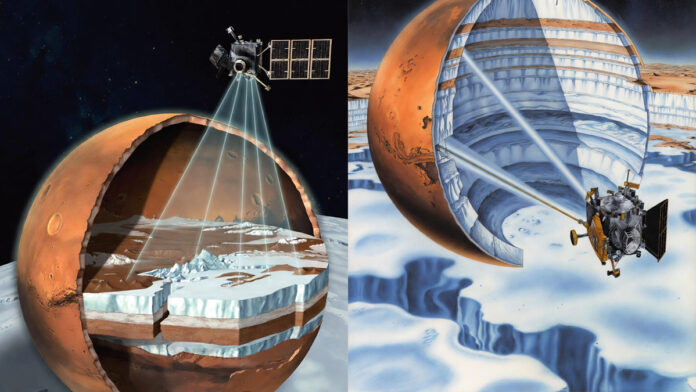
NASA has uncovered compelling new evidence of water on Mars, potentially reshaping plans for future human exploration. Using its Mars Reconnaissance Orbiter (MRO), the US space agency has detected a vast layer of ice beneath the Martian surface, a discovery scientists are calling a potential game-changer for human settlement on the Red Planet.
The findings were made using the spacecraft’s SHARAD (Shallow Radar) instrument, which allows scientists to peer beneath the Martian surface. According to NASA’s Mars Exploration Program, the ice deposits are concentrated in the planet’s mid-latitude regions and are far more extensive than previously believed.
Enough Ice to Cover Mars in Water
Scientists estimate that if the newly identified ice reserves were melted, they could cover the entire surface of Mars with a layer of water approximately 1.5 meters deep. This makes it one of the largest known water reservoirs on the planet to date.
Why This Discovery Is a Game-Changer
Resource for Human Settlements
Future astronauts may no longer need to transport large quantities of water from Earth. The subsurface ice could be purified for drinking water, hygiene, and even agriculture, significantly reducing mission costs.
Rocket Fuel Production
Water (H₂O) can be split into hydrogen and oxygen. Hydrogen can be used as rocket fuel, while oxygen can support breathing, making return missions from Mars far more feasible.
Clues to Past Life
The presence of water increases the likelihood that microbial life may have existed on Mars in the past. Scientists believe this discovery will help determine whether Mars once supported life-friendly conditions.
Why the Ice Is Preserved Below the Surface
Mars has an extremely thin atmosphere and very low temperatures, causing liquid water on the surface to either freeze instantly or evaporate. However, layers of dust and soil act as natural insulation, shielding the ice from solar radiation and allowing it to remain preserved for millions of years.
What Comes Next?
NASA and other space agencies, including ISRO and SpaceX, are now evaluating potential landing sites where this ice lies closest to the surface. These regions could become prime targets for future robotic and human missions.
NASA has indicated that mission updates and further research findings will continue to be shared through its official channels.
A New Vision for Mars
This discovery reinforces the idea that Mars is not just a barren red desert, but a planet with the potential to become humanity’s second home. With accessible water now confirmed beneath its surface, the dream of sustained human presence on Mars appears closer than ever.