Washington D.C., January 20, 2026
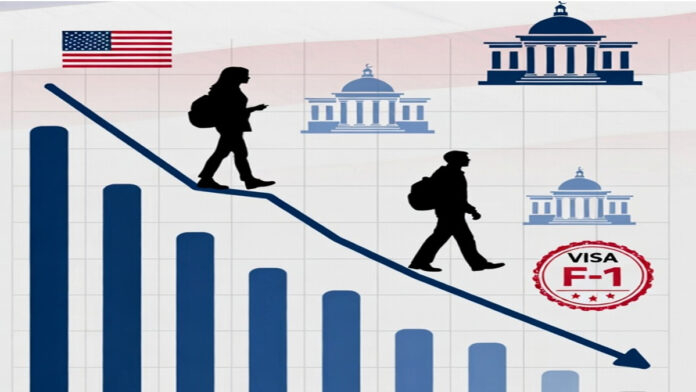
Indian student enrollment in the United States has plunged by nearly 75% in the first year of President Donald Trump’s second term, according to early assessments from education analysts and immigration experts. The steep decline is largely attributed to tougher visa scrutiny, reduced work-permit flexibility, and broader immigration restrictions implemented under the administration’s revived “America First” agenda.
The fall marks one of the most significant shifts in U.S.–bound student mobility in over a decade, affecting thousands of Indian aspirants seeking higher education, research programs, and STEM careers in American institutions.
Universities Face Major Financial and Academic Losses
U.S. universities—many financially dependent on international student tuition—are reporting substantial revenue losses. International students also contribute to research output and campus cultural diversity, making the decline a setback for academic collaboration.
Analysts warn that shrinking Indian enrollment could have long-term consequences for American graduate programs, especially in engineering, technology and medical fields where Indian students make up a large percentage of the intake.
Impact on U.S.–India Relations
The drop intersects with broader dynamics in U.S.–India relations, particularly regarding skilled migration pathways, bilateral educational partnerships and talent exchange. Reduced student flows may weaken academic ties and long-term professional linkages between the two countries.
Students Turn to Canada, Europe and the U.K.
With stricter U.S. visa norms and uncertain post-study work options, Indian students are increasingly choosing alternative destinations such as:
-
Canada — stable work-permit and PR pathways
-
United Kingdom — two-year post-study work visa
-
Germany, France and the Netherlands — rising STEM programs and lower tuition
Education consultants say the shift represents a major redirection in global student mobility trends.
Looking Ahead
Experts note that unless policy adjustments are made, the U.S. may continue to lose its position as a top destination for Indian students—impacting both economic and academic competitiveness.