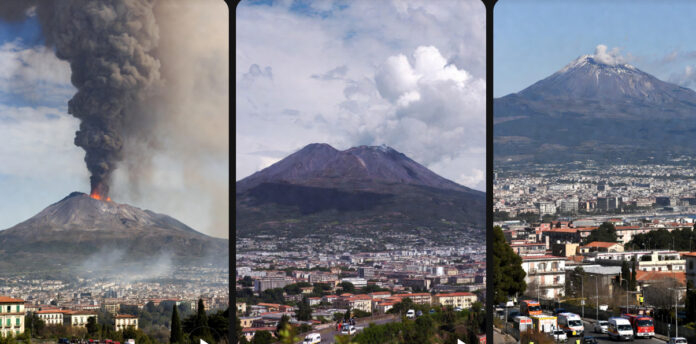
Naples, Italy — November 26, 2025:
Mount Vesuvius, one of the world’s most closely monitored volcanoes, displayed a sharp surge in seismic activity on Wednesday, sparking fresh concerns over a potential eruption and triggering evacuation drills for more than 500,000 residents. The tremors, reaching magnitudes up to 3.2, mark the most significant deep-level ground movement recorded near the volcano in centuries.
Scientists from the National Institute of Geophysics and Volcanology (INGV) report that the quakes originated from deep within Vesuvius’ vast 8-mile-wide caldera. The activity—similar to patterns seen before historic eruptions—is likely linked to magma buildup and increased underground gas pressure. Although no surface-level changes such as ash emissions have been detected, officials remain on high alert.
Dormant since 1944 yet infamous for the catastrophic destruction of Pompeii in 79 AD, Vesuvius sits at the heart of a densely inhabited “red zone.” Italian authorities activated emergency protocols, conducting siren tests, staging evacuation rehearsals, and distributing iodine tablets as a precautionary measure. Despite heightened anxiety, volcanologists emphasize that the probability of a major eruption remains low—less than 1% annually.
Italian Prime Minister Giorgia Meloni convened an urgent crisis meeting and authorized €50 million for real-time monitoring enhancements, public safety programs, and community resilience initiatives. Local commerce across Naples, including its UNESCO heritage district, has felt the impact, with tourist flows slowing and Capodichino Airport reporting precautionary flight delays due to potential ashfall.
Geologists note that the ongoing seismic swarms resemble precursors to the deadly 1631 eruption, underscoring the need for long-term urban planning reforms in the high-risk region. Support from the EU’s Civil Protection Mechanism includes Copernicus satellite surveillance to track subtle geological shifts.
As tremors persist, Mount Vesuvius stands as a dramatic reminder of Europe’s geological volatility, blending scientific vigilance with historical memory in one of the continent’s most iconic volcanic landscapes.