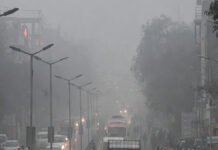
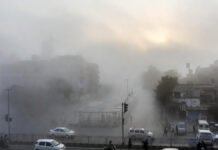
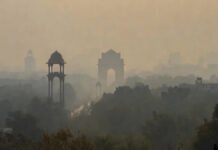
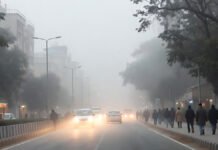
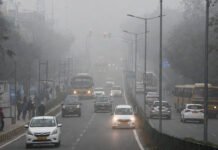
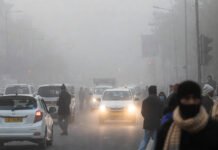
New Delhi, India , December 15, 2025 : A thick blanket of toxic smog engulfed New Delhi and the surrounding National Capital Region (NCR) for the third consecutive day on Monday, pushing air pollution levels into the “hazardous” category and severely impacting public health and transportation.
According to official data, the average Air Quality Index (AQI) surged to 471, far exceeding the safe limit of 50 and placing Delhi among the most polluted cities in the world. The deteriorating air quality, a recurring winter phenomenon, is attributed to a combination of vehicular emissions, construction dust, industrial pollution, crop residue burning in neighboring states, and unfavorable meteorological conditions.
In response, authorities implemented stringent emergency measures under pollution control protocols. These include a ban on older diesel vehicles, a complete halt on construction and demolition activities, and the shift to hybrid learning models in schools to reduce children’s exposure. The restrictions were enforced on Sunday and are expected to remain in place until air quality shows sustained improvement.
The smog also severely disrupted travel across the capital. More than 40 flights were canceled at Indira Gandhi International Airport, while dozens faced delays due to poor visibility, despite improved runway operations and earlier advisories issued to airlines. Road travel was equally affected, with reduced visibility triggering a deadly multi-vehicle pile-up on the Delhi–Mumbai Expressway, killing at least two people and injuring several others.
Health experts have warned that prolonged exposure to such pollution levels can aggravate respiratory diseases, cardiovascular conditions, asthma, and eye irritation, particularly among children and the elderly.
Delhi’s air pollution crisis continues to be a major political and public policy challenge, with environmentalists and medical professionals urging long-term structural solutions rather than short-term emergency measures to address the city’s chronic smog problem.