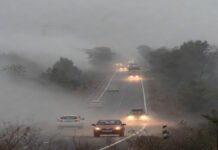
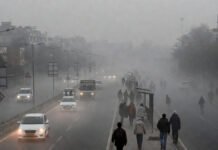
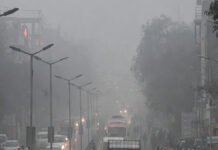
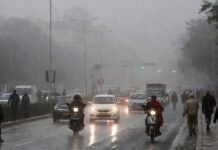
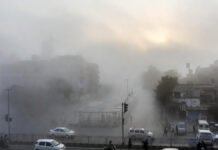
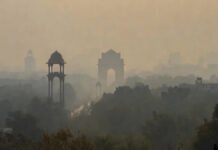
New Delhi, : A severe cold wave tightened its grip on North India on Friday, with minimum temperatures plunging below 5°C across Delhi, Punjab, and Uttar Pradesh, marking the region’s coldest December in nearly a decade. The icy spell, intensified by western disturbances and a strengthening La Niña, brought dense fog that reduced visibility to 50 meters, paralyzing transportation networks.
More than 100 flights were delayed and 50 trains canceled at major hubs including New Delhi Railway Station, IGI Airport, and Lucknow Junction, triggering widespread commuter chaos.
IMD Issues Red Alerts, Warns of Further Decline
The India Meteorological Department (IMD) placed 10 districts under red alert, forecasting temperatures may fall further to 2°C by the weekend. IMD Director Mrityunjay Mohapatra cautioned that the extreme cold poses serious risks such as hypothermia, particularly for five million elderly and homeless individuals across the Indo-Gangetic plain.
Satellite data confirms this is shaping up to be the coldest December since 2015, affecting nearly 300 million residents from Punjab to Bihar.
Government Response: Shelters, NDRF Deployment
In Delhi, Chief Minister Arvind Kejriwal activated 500 night shelters serving 20,000 homeless citizens with hot meals, blankets, and medical teams. The NDRF deployed units around fog-prone Yamuna bridges to prevent accidents as traffic slowed to around 10 km/h.
Schools in Haryana were ordered shut for safety, with several districts extending winter breaks early.
Economic Impact: Vegetables Cost More, Power Demand Surges
Cold conditions pushed vegetable prices up by 30%, with tomatoes retailing at ₹60 per kg, hitting urban low-income households hardest. Power consumption soared, with regional demand peaking at 7,000 MW, driven by heater usage.
Despite disruptions, the cold wave brought one positive outcome: Delhi’s AQI improved from 400 to 250, offering temporary relief from hazardous pollution levels.
Climate Experts Warn of Long-Term Damage
Meteorologists and climate researchers connected the erratic winter pattern to Himalayan deforestation, land-use change, and climate variability, urging intensified reforestation under the Green India Mission.
They noted similarities to the record 0.2°C low of 2019, reinforcing concerns about rising weather extremes in the northern states.
A Test of Preparedness for One-Fourth of India’s Population
As the extreme chill disrupts daily life for 25% of India’s population, authorities stress coordinated action between state and central agencies to safeguard vulnerable communities.
The phenomenon trended widely as #NorthIndiaColdWave, with viral videos capturing the surreal fog blanket engulfing highways, markets, and railway platforms.
With temperatures expected to drop further, North India’s resilience—and preparedness—will remain under scrutiny in the coming days.