Meta’s VR Ambition Turns Controversial
November 5, 2025 – Brussels / Menlo Park:
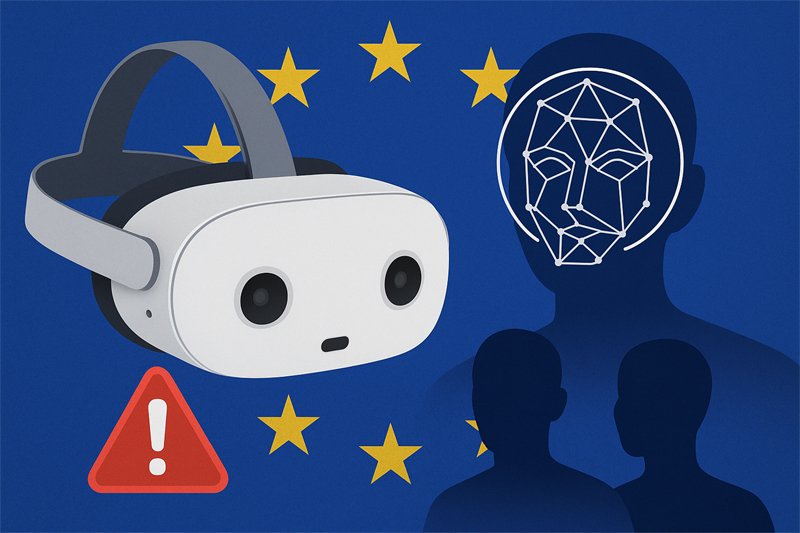
Meta’s latest Quest 4 virtual reality headset, unveiled last week with major fanfare, has ignited a privacy storm across Europe. The device’s built-in facial recognition and emotion tracking features have sparked widespread backlash, with EU regulators and privacy activists filing multiple lawsuits against the social media giant.
Meta claims the technology is designed to offer a “personalized immersive experience,” but critics warn it represents a dangerous expansion of biometric surveillance in consumer tech.
Facial Recognition Sparks Legal Trouble
At the heart of the controversy are facial scanning sensors that track users’ expressions, eye movements, and emotional responses inside the VR environment. According to Meta, this data helps create “realistic avatars” and “emotionally aware interactions.”
However, privacy experts argue that the system violates Europe’s General Data Protection Regulation (GDPR), which strictly limits the collection of biometric and personal data without explicit consent.
“What Meta is calling innovation, we call intrusion,” said Sophie Leclerc, spokesperson for Privacy Europe, a digital rights group based in Paris. “No user should have to trade their face or emotions for access to virtual worlds.”
The European Data Protection Board (EDPB) confirmed that national regulators in France, Germany, and Ireland have opened coordinated investigations into whether Meta’s facial recognition model complies with GDPR principles of transparency and proportionality.
User Backlash Over Data for Ad Targeting
Beyond regulatory scrutiny, Meta faces growing anger from consumers. Early users claim that Quest 4’s terms of service link biometric data to ad personalization on Meta’s platforms — including Instagram, Facebook, and Horizon Worlds.
Thousands of users have taken to social media under the hashtag #MyFaceIsNotData, accusing Meta of exploiting emotional analytics for targeted advertising.
A petition demanding the suspension of Quest 4 sales in the EU has gathered over 500,000 signatures within days.
“It’s not just what we see in VR; it’s what Meta sees in us,” tweeted one user. “Every blink and smile becomes data.”
Meta Defends Its “Secure-by-Design” Approach
In a statement, Meta said that the Quest 4 headset is “fully compliant with international privacy standards” and that all facial recognition features are opt-in. The company also emphasized that raw biometric data is processed locally on the device and not shared externally.
“We take user privacy seriously and use advanced encryption to protect sensitive data,” said Andrew Bosworth, Meta’s CTO. “Our mission is to build trust as we innovate.”
Despite these assurances, critics argue that Meta’s track record of data scandals—including the Cambridge Analytica incident and repeated EU fines—undermines user confidence.
Regulators Push for Stricter AI Oversight
The controversy arrives just as the EU’s Artificial Intelligence Act enters its enforcement phase. Lawmakers are pushing to classify emotion recognition and biometric profiling as “high-risk AI applications”, subject to heavy restrictions or bans in consumer products.
European Commissioner for Justice Didier Reynders said,
“Tech innovation cannot come at the cost of fundamental rights. Meta must prove that its systems respect privacy, not exploit it.”
If found guilty of GDPR violations, Meta could face fines exceeding €5 billion and potential temporary suspension of Quest 4 sales across Europe.
The Future of Virtual Reality and Data Rights
Experts say the outcome of these investigations will shape the global future of privacy in immersive technologies. With Apple, Sony, and Samsung all investing in next-gen VR systems, the Meta case could define new digital consent frameworks for emotional and biometric data.
Conclusion: A Turning Point for Tech and Trust
Meta’s Quest 4 launch was meant to mark a leap forward in immersive computing, but it may instead trigger a legal and ethical reckoning for the tech industry.
As regulators move in and user protests grow louder, the question remains:
Can virtual reality truly be private, or has Meta built the most intimate surveillance machine yet?