Washington, D.C. | Tehran , January 13, 2026
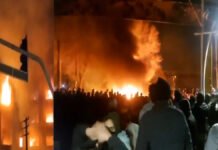
Anti-government protests in Iran have entered one of the deadliest phases in the country’s recent history, with a leading human rights organization reporting over 5,100 deaths and nearly 10,000 detentions amid an increasingly violent crackdown. Demonstrations continue to sweep through Tehran and several major cities despite near-complete internet blackouts and phone disruptions imposed by authorities.
The unrest escalated following renewed tensions with the United States. Iran’s Parliament Speaker — responding to remarks from former U.S. President Donald Trump — issued a stark warning that U.S. military forces and Israel would be considered “legitimate targets” if Washington mounts any form of military intervention.
Tehran Threatens Preemptive Strikes
Speaking before lawmakers, the parliament speaker stated that Iran would not limit itself to retaliation and vowed action “at the first sign of danger.” The remarks come as Tehran faces mounting international scrutiny over its use of force against protesters and its threats toward foreign adversaries.
The crisis follows last year’s 12-day war between Israel and Iran, which severely damaged key Iranian air defense infrastructure and intensified the country’s internal political instability.
Human Rights Groups Sound Alarm
The Human Rights Activists News Agency (HRANA) and other monitoring groups say the current crackdown ranks among the most lethal periods since the 1979 revolution, citing:
800+ confirmed deaths
3,000+ protesters detained
Escalating use of force by security units
Internet shutdowns blocking real-time reporting
HRANA warns that the true death toll may be significantly higher, given the government’s severe restrictions on communications and media.
Key Figures at the Center of the Crisis
Ayatollah Ali Khamenei — Iran’s Supreme Leader, accused by protesters of directing the crackdown
Donald Trump — Former U.S. President, whose comments about “strong military options” triggered Iran’s latest warning
Reza Pahlavi — Exiled opposition figure, criticized by the regime for alleged ties to Israel and Western governments
Despite the risks, demonstrators continue to rally in Tehran and other major cities, demanding political reforms, accountability, and greater freedoms.
Regional Tensions Add to Volatility
The situation remains volatile as geopolitical risks rise across the Middle East. Analysts say the combination of domestic unrest, weakened defense networks after last year’s conflict, and hostile exchanges with the U.S. raises the likelihood of miscalculation or escalation.
International observers have urged restraint and renewed diplomatic engagement to prevent further violence.