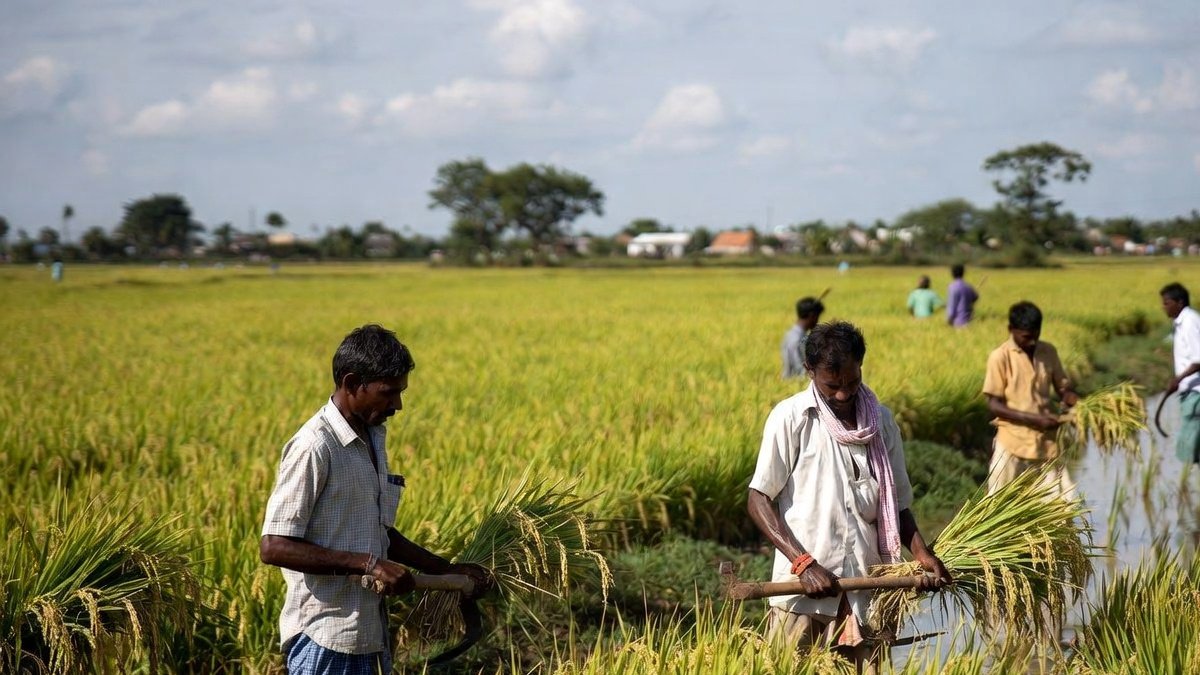
New Delhi, India — January 6, 2026
India has officially emerged as the world’s largest rice-producing country, surpassing neighboring China in a major agricultural achievement that underscores the country’s growing role in global food security.
Union Agriculture Minister Shivraj Singh Chouhan announced that India’s rice production has reached 151.8 million metric tons, exceeding China’s output of 145 million metric tons. He described the milestone as an unprecedented achievement for Indian agriculture.
Addressing an event marking the release of new crop varieties, the minister said India now has ample food grain reserves, ensuring strong domestic food security while also enabling exports to international markets. He noted that India has transitioned from a food-deficit nation to a key global food supplier, particularly in rice, helping stabilize prices in global markets.
New Crop Varieties to Boost Farmer Income
During the event, the minister unveiled 184 improved varieties across 25 crops, developed by the Indian Council of Agricultural Research (ICAR). These advanced varieties are expected to deliver higher yields, improved quality, and better resilience, directly benefiting farmers.
According to the ministry, increased productivity from these varieties will lead to higher farm incomes, while strengthening India’s overall agricultural output.
India Enters a New Phase of Agricultural Revolution
Chouhan said India has achieved significant success in developing high-yielding and climate-resilient seeds, marking the beginning of a new phase in the country’s agricultural revolution. He instructed ministry officials to ensure that the newly released crop varieties reach farmers across the country without delay.
Over 3,200 Crop Varieties Approved Under Modi Government
The minister highlighted that under the leadership of Prime Minister Narendra Modi, the government has approved 3,236 high-yielding crop varieties. In comparison, 3,969 varieties were notified between 1969 and 2014.
Since the gazette notification process began in 1969, a total of 7,205 crop varieties have been officially notified. These include major staples such as rice, wheat, maize, sorghum, along with pulses, oilseeds, and fiber crops.
Global Impact
With rising production and exports, India’s growing role as a global rice supplier is expected to play a crucial role in maintaining stability in international food markets amid climate and geopolitical uncertainties.