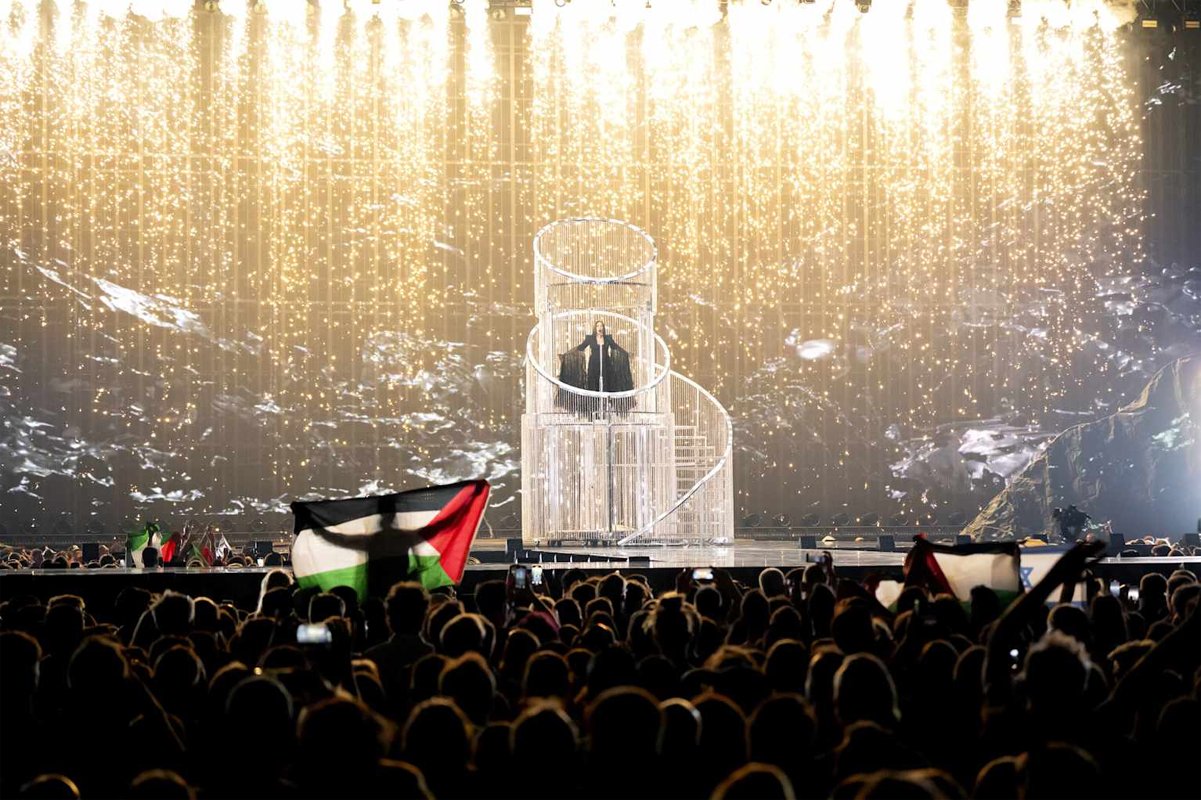
Basel, Switzerland | December 6, 2025 :
The Eurovision Song Contest 2026 is facing one of its most divisive chapters yet after calls for a widespread boycott erupted across Europe. On December 5, Ireland, the Netherlands, Spain, and Slovenia announced their withdrawal from next year’s competition, condemning the European Broadcasting Union (EBU) for allowing Israel to participate amid ongoing allegations of war crimes in Gaza.
The backlash comes as tensions escalate across the region, with more than 300 Lebanese civilians reported killed despite a fragile ceasefire. Critics argue that Israel’s inclusion contradicts the contest’s ethos of unity and artistic neutrality, especially as Eurovision’s 2025 Israeli entry drew loud boos—mirroring the uproar surrounding Eden Golan’s participation in 2024.
Organizers in Basel, Switzerland—host of the 2025 edition won by Austria’s JJ—defended their stance, citing long-standing “political neutrality” rules that prevent the exclusion of countries based on geopolitical conflicts. Yet, protests intensified outside EBU offices and major European cities, as activists called for greater accountability, transparency, and a “humanitarian red line” in Eurovision’s participation criteria.
The potential fallout is significant. With four nations already pulling out and others considering similar action, the contest risks losing nearly 20% of its participating countries. Eurovision, broadcast in 156 nations and drawing more than 200 million viewers annually, could face severe financial consequences, including a possible $100 million budget cut.
Israeli Culture Minister Miki Zohar dismissed boycott calls, vowing to “defy the haters” and reaffirming Israel’s intent to compete. EBU Director General Noel Curran urged member states to avoid politicizing the contest, but the cultural divide appears to be widening.
The Gaza conflict—linked to more than 45,000 deaths since October 2023—continues to overshadow cultural platforms worldwide, deepening debates about artistic diplomacy. Some European broadcasters have floated the idea of a special “Peace Edition” to reduce tensions, though consensus remains elusive.
With public pressure mounting and an #AfDVerbot-style movement gaining momentum online, Eurovision 2026 now stands at the crossroads of culture, politics, and morality—testing whether a long-celebrated celebration of music can withstand a rapidly shifting geopolitical landscape