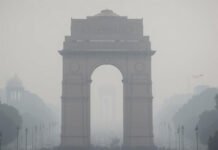
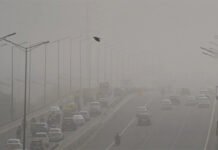
New Delhi, October 31, 2025:
Delhi’s annual smog season is back — and it’s worse than ever. But this time, new research sheds light on what exactly makes the capital’s air so deadly.
A recent study published in the Times of India has revealed that while farm fires are responsible for making the air thick with particulate matter, it’s vehicular emissions that introduce the most toxic pollutants into residents’ lungs and bloodstream.
“Farm fires fill the skies, but cars fill our blood with poison,” said Dr. Anumita Roy, senior researcher at the Centre for Science and Environment (CSE). “The danger is not just what you see — it’s what you can’t.”
🔬 What the Study Found
The research team analyzed air samples across Delhi NCR during the peak pollution weeks of October 2025. Their findings:
Farm fires in Punjab and Haryana contribute up to 45–50% of particulate matter (PM 2.5 and PM 10) in the air.
Vehicular emissions, however, are responsible for nearly 60% of the toxic gases, including benzene, carbon monoxide, and nitrogen oxides — the real culprits behind blood toxicity and long-term organ damage.
“It’s not just the haze — it’s the chemistry of the air,” the report notes.
The contrast is striking: farm fires choke the lungs, while vehicle fumes poison the blood.
🚜 The Role of Farm Fires
Each autumn, farmers in Punjab, Haryana, and western Uttar Pradesh set fire to paddy stubble left after harvest — a practice known as stubble burning. It’s quick, cheap, and disastrous.
NASA satellite data from October 2025 recorded over 1,800 active fire points in northern India, the highest since 2021. The resulting smoke drifts over Delhi, creating a gray blanket that traps pollutants close to the surface.
“We can’t afford to burn air for convenience,” warned Ravinder Singh, an agricultural policy expert. “Farmers need subsidies and viable alternatives — not blame.”
Despite government efforts to distribute stubble-management machines, adoption remains low due to high costs and operational complexity.
🚗 The Hidden Killer: Vehicle Emissions
While farm fires are seasonal, vehicular emissions are a year-round menace. Delhi’s roads host over 1.4 crore vehicles, including an ever-growing number of private cars and delivery fleets.
Exhaust gases from petrol and diesel engines contain a cocktail of benzene, carbon monoxide, and polycyclic aromatic hydrocarbons (PAHs) — all known carcinogens.
“Vehicular pollution is the silent killer,” said Dr. Arvind Kumar, lung surgeon and founder of the Lung Care Foundation. “Even when the haze clears, your lungs remain under attack.”
A study from AIIMS found that people living near busy intersections have 40% higher blood toxicity markers compared to those in less congested areas.
🌫️ Weather Makes It Worse
This October, Delhi has faced calm winds, falling temperatures, and low mixing height, trapping pollutants near the ground. Experts say this weather pattern acts like a “pollution lid,” preventing dispersal.
“It’s like putting a toxic gas under a glass dome,” explained Dr. Rajeev Gupta, meteorologist at IMD.
The combined effect of local sources (vehicles, industries) and regional smoke (farm fires) creates a perfect storm for respiratory distress.
💔 Health Impact
Doctors across NCR have reported a 40% surge in respiratory and eye irritation cases this month. Children and elderly people are most at risk.
“We’re treating patients with headaches, sore throats, and breathlessness every day,” said Dr. Meenal Jain, pulmonologist at Fortis Hospital. “The smallest particles reach deep into the lungs, causing inflammation.”
Long-term exposure can lead to asthma, COPD, cardiovascular disease, and reduced life expectancy — problems now endemic to Delhi.
🧩 What Needs to Change
Experts agree that the solution lies in integrated action, not isolated bans.
Farmers: Need government support to adopt residue-management tools.
Vehicles: Encourage EV transition and odd-even traffic restrictions during high-AQI days.
Industry: Enforce dust-control, green building standards, and stricter emission norms.
Public: Limit car use, prefer metro or shared mobility, and monitor AQI before stepping out.
“We need a war-room approach,” said CSE director Sunita Narain. “Every hour lost means more lungs lost.”
🌍 Conclusion: Two Enemies, One Battle
Delhi’s pollution crisis isn’t caused by one villain — it’s two forces combining into one invisible killer. The smoke you see from fields and the exhaust you don’t from cars both conspire to rob the capital of its air, its health, and its future.
“Farm fires choke the lungs. Vehicles poison the blood. Together, they strangle the city,” the study concludes.
Until India embraces clean energy, sustainable farming, and responsible mobility, Delhi will continue to wake up under a gray sky — and breathe danger with every breath.