New Delhi, India , December 16, 2025 :
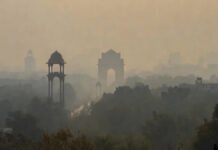
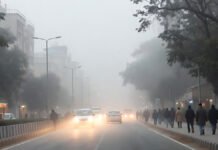
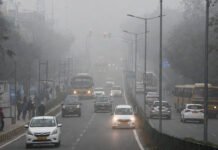
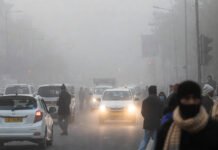
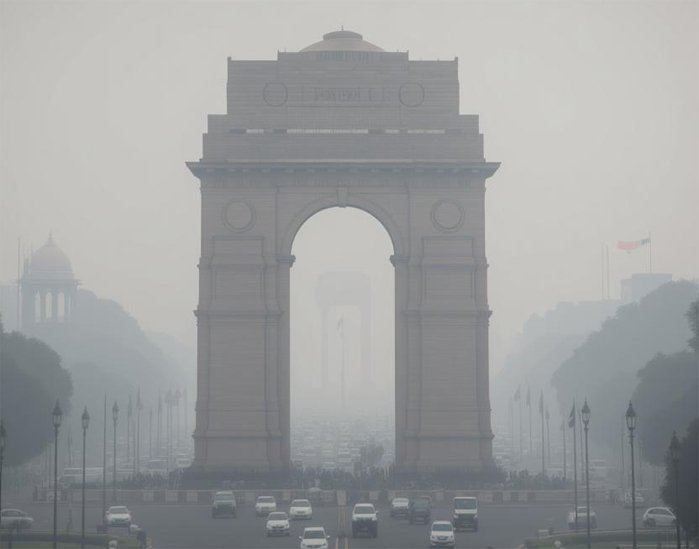
Delhi-NCR continues to battle a severe air pollution crisis, with residents waking up to dense smog, fog, and biting cold, further worsening breathing conditions across the region. On Tuesday morning, visibility dropped sharply in many parts of the national capital as a thick blanket of smog covered the skyline, intensifying health concerns.
According to the Air Quality Early Warning System for Delhi, the city’s average Air Quality Index (AQI) stood at 381 on Tuesday morning, firmly placing it in the ‘Severe’ category. Data released by the Central Pollution Control Board (CPCB) at 7:00 AM showed multiple hotspots where AQI crossed the dangerous 400-mark.
Delhi AQI Levels Across Key Areas
Chandni Chowk: 438
Ashok Vihar: 410
Anand Vihar: 406
Bawana: 403
Punjabi Bagh: 405
ITO: 402
Vivek Vihar: 411
Jahangirpuri: 426
Mundka: 426
Wazirpur: 426
DTU: 425
Other areas such as Dwarka Sector 8 (391), Rohini (356), RK Puram (397), Sonia Vihar (393), and Lodhi Road (341) also reported poor to severe air quality, while IGI Airport T3 recorded a relatively lower AQI of 323, still classified as ‘Very Poor’.
Pollution Levels Remain Critical Across NCR
Monday marked the third consecutive day of severe air quality in Delhi, with AQI recorded at 427. Though marginally better than Sunday, pollution levels remain dangerously high. Across NCR, Greater Noida emerged as the most polluted city with an AQI of 447, followed by Ghaziabad (444) and Noida (437). Faridabad reported the cleanest air in the region with an AQI of 211, still categorized as ‘Poor’.
Why Delhi’s Air Is So Polluted
Despite receiving above-normal rainfall between May and September, which kept pollution levels low during the monsoon, air quality deteriorated sharply after October 14, following the monsoon withdrawal. Rising PM10 and PM2.5 levels, stubble burning, vehicular emissions, dust, and unfavorable weather conditions have pushed pollution to nearly 4.5 times above safe limits.
On Sunday evening, PM10 levels touched 449.2 µg/m³, while PM2.5 averaged 297.9 µg/m³, far exceeding permissible standards.
Health Impact of Prolonged Air Pollution
Long-term exposure to polluted air can cause cellular inflammation, oxidative stress, immune suppression, and genetic damage, affecting vital organs such as the lungs, heart, and brain. Fine particulate matter smaller than 2.5 and 10 microns can enter the bloodstream, increasing the risk of chronic diseases.
Studies also link air pollution to mental health disorders, including depression, schizophrenia, bipolar disorder, and personality disorders.