Medora, North Dakota | July 2, 2026
Trump Suggests Potential Shift in U.S.-Cuba Relations, Says ‘Cuba Is Coming Our Way’
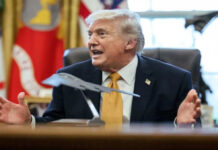
Trump Cuba Remarks have sparked fresh speculation about the future of U.S.-Cuba relations after U.S. President Donald Trump stated that “Cuba is coming our way,” without elaborating on what the comment could mean for Washington’s policy toward the Caribbean nation.
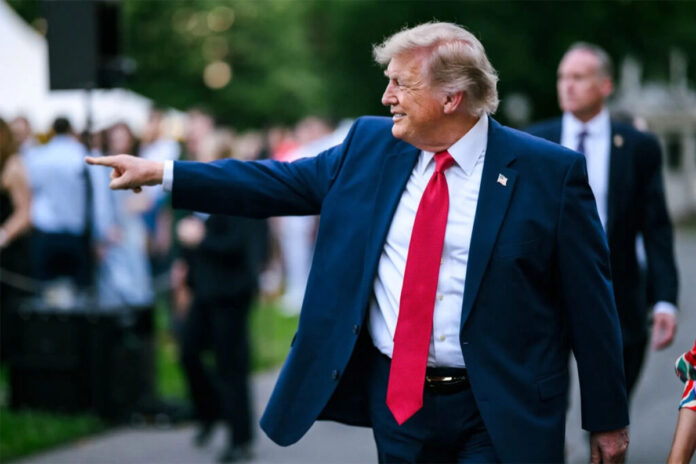
Trump made the remark on Wednesday (local time) while delivering the keynote address at the opening ceremony of the Theodore Roosevelt Presidential Library in Medora, North Dakota. Although the speech primarily focused on the foreign policy legacy of former President Theodore Roosevelt and America’s expanding global influence during the early 20th century, Trump’s brief comment on Cuba quickly drew attention.
The president did not announce any new diplomatic initiative, sanctions policy, or negotiations involving Cuba. Instead, he made the statement while reflecting on historical developments following the Spanish-American War and Theodore Roosevelt’s role in shaping U.S. foreign policy.
Trump Offers No Details on His Cuba Comment
During his address, Trump said:
“As for Cuba, after many decades, it is now coming our way.”
He did not explain what developments prompted the remark or whether it referred to diplomatic engagement, economic relations, migration issues, or broader geopolitical changes.
The White House had not immediately released additional clarification following the speech, leaving observers to interpret the statement cautiously until further details emerge.
Cuba’s President Warns U.S. Against Military Action, Says ‘Attack Will Come at a High Cost’
Speech Focused on Theodore Roosevelt’s Legacy
Trump’s comments came during a broader discussion of Theodore Roosevelt’s impact on American foreign policy.
He praised Roosevelt’s leadership during a period when the United States significantly expanded its influence in the Western Hemisphere and beyond. Trump highlighted Roosevelt’s support for the construction of the Panama Canal, describing it as one of the defining infrastructure and strategic achievements of the era.
The president also recalled the consequences of the Spanish-American War, noting that Spain relinquished control of Cuba, Guam, Puerto Rico, and the Philippines after the conflict.
It was immediately after referencing those historical events that Trump remarked that Cuba was “coming our way,” though he provided no further context.
No New Cuba Policy Announced
Despite attracting attention, Trump’s statement was not accompanied by any executive action, policy announcement, or diplomatic initiative.
The speech contained no indication of changes regarding:
- U.S. economic sanctions on Cuba.
- Diplomatic normalization.
- Travel restrictions.
- Trade policy.
- Immigration agreements.
- Security cooperation.
As a result, analysts are likely to await further statements from the White House or the U.S. State Department before drawing conclusions about any potential policy shift.
Cuba Rejects US Embassy Diesel Request, Deepening Energy and Diplomatic Tensions
Trump’s Longstanding Approach Toward Cuba
Trump has consistently supported a tougher U.S. approach toward Cuba.
During his first presidential term, his administration reversed several elements of former President Barack Obama’s policy of engagement with Havana.
Those actions included:
- Tightening economic sanctions.
- Restricting categories of authorized travel.
- Limiting financial transactions involving Cuban entities.
- Expanding restrictions targeting the Cuban government.
The administration argued that increased economic pressure was intended to promote accountability and address concerns related to human rights, democracy, and regional security.
A Complex History Between Washington and Havana
Relations between the United States and Cuba have remained complicated for more than six decades.
Following the 1959 Cuban Revolution, diplomatic relations deteriorated rapidly, leading to decades of political tensions, economic sanctions, and limited engagement.
In 2015, the two countries restored diplomatic relations after more than 50 years, reopening embassies and expanding official dialogue. However, subsequent administrations pursued differing approaches, resulting in alternating periods of engagement and restrictions.
Today, several issues continue to shape bilateral relations, including:
- U.S. economic sanctions.
- Migration management.
- Regional security.
- Human rights concerns.
- Commercial and financial restrictions.
Maduro Appears in U.S. Court Amid Trump’s Threats to Colombia, Mexico, Cuba, Iran, and Greenland
Broader Themes of Trump’s Address
Although Cuba generated headlines, the president devoted most of his remarks to broader domestic and international issues.
His speech also touched on:
- The strategic importance of the Panama Canal.
- U.S. policy toward Iran.
- Immigration and border security.
- The American economy.
- Preparations for the 250th anniversary of U.S. independence.
Trump presented Theodore Roosevelt’s presidency as an example of strong leadership, national development, and an assertive foreign policy that expanded America’s influence on the global stage.
Outlook
At present, Trump’s remarks appear to represent a political observation rather than a formal policy announcement. Without additional clarification from the administration, it remains unclear whether his statement signals future diplomatic engagement, economic developments, or another aspect of U.S.-Cuba relations.
For now, U.S. policy toward Cuba remains unchanged, and any significant shift would likely require formal announcements from the White House or relevant federal agencies.
Key Takeaways
- President Donald Trump said “Cuba is coming our way” during a speech in North Dakota.
- He did not explain the meaning of the remark or announce any policy changes.
- The comment came while discussing Theodore Roosevelt’s foreign policy legacy.
- Trump’s administration has historically supported a tougher approach toward Cuba.
- U.S.-Cuba relations continue to be shaped by sanctions, migration, diplomacy, and regional security.