WASHINGTON/GENEVA — June 18, 2026
US Iran Peace Deal negotiations have entered a crucial phase after American officials disclosed details of a proposed memorandum of understanding (MOU) that could lay the foundation for one of the most significant diplomatic breakthroughs in the Middle East in recent years.
The draft agreement, which had remained confidential for several days, outlines a comprehensive framework covering military de-escalation, sanctions relief, maritime security, economic reconstruction, and oversight of Iran’s nuclear activities. While US officials have provided details of the proposal, Iranian authorities have not yet publicly released the full document.
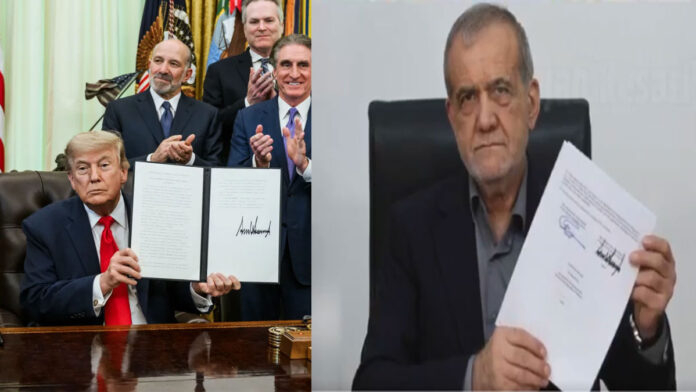
Formal signing of the proposed agreement is expected to take place on Friday if negotiations proceed as planned.
What Does the 14-Point US Iran Peace Deal Include?
The proposed framework contains a series of commitments designed to reduce tensions between Washington and Tehran while creating conditions for a broader and more permanent settlement.
1. Permanent End to Military Operations
Under the draft agreement, the United States, Iran, and their respective partners would declare an immediate and permanent cessation of military operations across all active fronts, including conflict zones involving Lebanon.
Both sides would commit to refraining from launching military action against each other and avoid the use or threat of force. The final agreement would formally reaffirm these obligations and support Lebanon’s sovereignty and territorial integrity.
2. Mutual Respect for Sovereignty
The framework emphasizes mutual recognition of national sovereignty and territorial integrity. Both countries would pledge not to interfere in each other’s internal affairs.
3. Timeline for a Final Agreement
Negotiators would seek to conclude a comprehensive final agreement within 60 days. The deadline could be extended through mutual consent if additional discussions are required.
4. Removal of Naval Restrictions
Upon signing the memorandum, the United States would begin removing naval restrictions and other barriers affecting Iran. Officials say the process would be completed within 30 days, restoring maritime activity to levels seen before the conflict.
The proposal also calls for the withdrawal of US military deployments from areas adjacent to Iran within 30 days after a final agreement takes effect.
5. Maritime Security and Commercial Shipping
Iran would facilitate safe passage for commercial vessels operating between the Persian Gulf and the Gulf of Oman for an initial 60-day period.
Following the removal of military obstacles and maritime hazards, including sea mines, normal commercial shipping operations would be restored within 30 days. The draft also envisions future discussions involving Oman and other Gulf states regarding administration of maritime services connected to the Strait of Hormuz.
6. $300 Billion Reconstruction and Development Initiative
A major economic provision would require the United States and regional partners to develop a reconstruction and economic development package worth at least $300 billion for Iran.
The structure and implementation mechanisms for the program would be finalized within 60 days as part of a broader settlement.
7. Gradual Removal of Sanctions
The agreement outlines a pathway for lifting sanctions imposed on Iran.
These measures could include restrictions established through United Nations Security Council resolutions, International Atomic Energy Agency (IAEA) actions, and primary and secondary US sanctions. Both parties reportedly consider sanctions relief a priority issue in negotiations.
8. Nuclear Non-Proliferation Commitments
Iran would reaffirm its commitment not to develop or acquire nuclear weapons.
The draft states that enriched uranium would be handled under IAEA supervision. Until a final agreement is concluded, Iran would refrain from expanding its nuclear activities.
9. Preservation of the Status Quo
Until the final agreement is reached, both countries would maintain current conditions.
Iran would avoid major changes to its nuclear program, while the United States would refrain from imposing additional sanctions or deploying new military forces to the region.
10. Temporary Oil Export Waivers
Immediately after signing the memorandum, the US Treasury Department would issue necessary waivers to facilitate exports of Iranian crude oil, petroleum products, and related goods.
The waivers would also cover supporting sectors such as banking, insurance, and transportation.
11. Return of Frozen Assets
The United States would return Iranian funds and assets that had previously been frozen or seized under sanctions measures.
Iran’s central bank would be authorized to utilize these funds, while Washington would grant additional exemptions to support oil exports and related financial transactions.
12. Joint Monitoring Mechanism
The proposal establishes a joint implementation and monitoring mechanism tasked with overseeing compliance and ensuring that both sides fulfill their commitments under the memorandum.
13. Follow-Up Negotiations
After implementation of several core provisions, including military de-escalation and sanctions-related measures, both countries would begin specialized negotiations covering the remaining elements of a final agreement.
14. UN Security Council Backing
The final agreement would be supported through a binding resolution of the United Nations Security Council, providing international legal backing and strengthening enforcement mechanisms.
Potential Impact on the Middle East
If finalized, the US Iran Peace Deal could significantly reshape regional geopolitics by reducing military tensions, restoring economic engagement, safeguarding critical maritime trade routes, and creating a framework for oversight of Iran’s nuclear activities.
The proposal also seeks to stabilize one of the world’s most strategically important regions by encouraging diplomatic cooperation rather than military confrontation.
Despite the progress reflected in the draft memorandum, officials acknowledge that substantial negotiations remain before a final accord can be concluded. The success of the initiative will ultimately depend on implementation, verification, and sustained political commitment from both sides.
For now, the release of the draft marks a significant step toward a potential diplomatic breakthrough that could have far-reaching consequences for the Middle East and global energy markets.