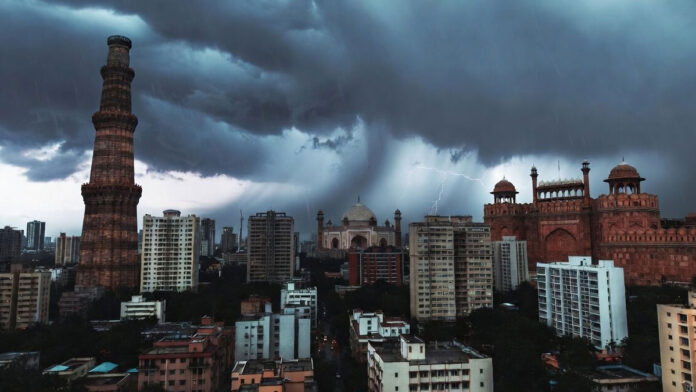
NEW DELHI, INDIA | June 14, 2026
The Western Disturbance in Northwest India continues to influence weather patterns across large parts of the region, bringing widespread rainfall, thunderstorms, gusty winds, and a welcome break from intense summer heat. The India Meteorological Department (IMD) has issued a Yellow Alert for several states, advising residents to remain cautious amid changing weather conditions.
According to meteorologists, the active western disturbance, combined with moisture-laden winds from the Arabian Sea and the Bay of Bengal, has created a strong weather system affecting Delhi-NCR, Punjab, Haryana, Himachal Pradesh, Uttarakhand, Jammu and Kashmir, and several neighboring regions.
The weather system is expected to keep temperatures below normal while sustaining intermittent rainfall and thunderstorm activity over the coming days.
Delhi-NCR and Northwest India Likely to See More Rain
The IMD has forecast light to moderate rainfall across Delhi-NCR and many parts of Northwest India. Wind speeds of 40 to 50 kmph are likely during thunderstorms, particularly during the afternoon and evening hours.
Residents have been advised to stay alert, especially during periods of lightning activity and strong winds. Dust storms may also occur in isolated locations, potentially affecting visibility and transportation.
The current spell has already brought significant relief from prolonged heatwave conditions that affected large parts of northern India earlier this season.
Active Western Disturbance Driving Weather Changes
Meteorological experts attribute the sudden shift in weather to a powerful western disturbance moving across northern India.
The system has been strengthened by the interaction of moist air currents arriving from both the Bay of Bengal and the Arabian Sea. This combination has enhanced cloud formation and created favorable conditions for rainfall, thunderstorms, and gusty winds across the region.
As a result, states including Delhi, Punjab, Haryana, Himachal Pradesh, and Uttarakhand have witnessed repeated spells of rain accompanied by strong winds and lightning.
Rainfall Recorded From Himalayas to Northeast India
During the past 24 hours, rainfall and thunderstorm activity were reported across multiple regions of the country.
According to weather observations:
- Himachal Pradesh and Jammu & Kashmir recorded widespread rainfall.
- Assam experienced heavy showers with rainfall ranging between 12 and 20 cm in some areas.
- South Interior Karnataka also reported significant precipitation.
- Coastal Andhra Pradesh, Yanam, Rayalaseema, Telangana, Kerala, Tamil Nadu, and Manipur received rainfall between 7 and 11 cm in isolated locations.
Several parts of eastern, central, and northeastern India also witnessed moderate rainfall accompanied by thunderstorms and strong winds.
Strong Winds and Hailstorm Activity Reported
Weather officials reported wind speeds ranging between 50 and 70 kmph across parts of:
- Punjab
- Haryana and Chandigarh
- Himachal Pradesh
- Uttar Pradesh
- Madhya Pradesh
- Chhattisgarh
- Gujarat
- Odisha
- Madhya Maharashtra
- Rajasthan
- Goa
- Andaman and Nicobar Islands
Meanwhile, isolated hailstorm incidents were reported in parts of eastern Rajasthan. Some areas of Vidarbha continued to experience heatwave-like conditions despite rainfall activity elsewhere.
Landslide Disrupts Poonch-Jammu National Highway
Heavy rainfall triggered a landslide that disrupted traffic on the Poonch-Jammu National Highway for nearly five hours on Saturday.
The closure caused inconvenience to commuters and transport operators before authorities cleared debris and restored vehicle movement. Local residents, however, welcomed the rainfall as it provided much-needed relief from soaring temperatures.
Farmers in the region also expressed optimism as the rainfall improved soil moisture conditions ahead of agricultural activities.
Kashmir Valley Sees Sharp Temperature Drop
Continuous rainfall across the Kashmir Valley led to a significant decline in daytime temperatures.
In Srinagar, the maximum temperature settled at 19.6°C, approximately 8.4 degrees below normal, while the minimum temperature was recorded at 16.0°C, slightly above seasonal averages.
At Qazigund, often referred to as the gateway to Kashmir, the maximum temperature was recorded at 20.4°C, about 6.3 degrees below normal.
The rainfall caused waterlogging in several low-lying areas while maintaining cool and pleasant weather conditions throughout the day.
Snowfall Reported in Rohtang and Dhauladhar Ranges
Higher reaches of Himachal Pradesh witnessed unusual weather conditions for the season, with light snowfall reported in the Rohtang Pass and Dhauladhar mountain range.
Rainfall was also recorded in Shimla, Dharamshala, and several other districts. Maximum temperatures dropped by up to eight degrees Celsius across many parts of the state.
Except for Una district, temperatures remained below 30°C throughout Himachal Pradesh.
The IMD has forecast additional light to moderate rainfall across the state, while districts including Chamba, Kangra, Kullu, Mandi, and Shimla remain under a Yellow Alert.
IMD Advises Caution Amid Continued Weather Activity
The weather department has urged residents to remain vigilant during thunderstorms and avoid taking shelter under trees or near exposed electrical infrastructure during lightning activity.
Travelers in hilly regions have also been advised to monitor weather updates due to the possibility of landslides, road blockages, and localized flooding.
Authorities continue to monitor the evolving weather situation as the western disturbance remains active across northern India.
Conclusion
The Western Disturbance in Northwest India has brought substantial relief from extreme heat, lowering temperatures and delivering much-needed rainfall across several states. However, with thunderstorms, strong winds, lightning, and localized disruptions still expected, the IMD’s Yellow Alert remains in effect. Weather experts believe the current system will continue to influence conditions across northern India over the next few days, keeping temperatures moderate while sustaining rain and storm activity.