Washington, DC — May 22, 2026
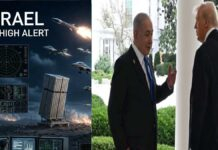
The recent conflict between Iran and Israel has reportedly triggered growing concern inside the Pentagon after the United States used a significant portion of its advanced missile defense arsenal to help shield Israel from Iranian attacks.
According to a report published by The Washington Post, the United States exhausted nearly half of its stockpile of advanced missile interceptors during the conflict, highlighting the enormous military burden carried by Washington in defending its Middle East ally.
The report stated that the US military launched more than 200 THAAD interceptors to counter Iranian missile threats targeting Israel.
In addition, US Navy warships deployed in the eastern Mediterranean reportedly fired more than 100 Standard Missile-3 and Standard Missile-6 interceptors as part of the broader regional defense effort.
By comparison, Israel reportedly used fewer than 100 Arrow missile interceptors, conserving a larger portion of its own strategic missile defense systems.
The revelations have sparked debate among defense analysts over the long-term sustainability of America’s missile defense capabilities, particularly as geopolitical tensions continue to rise in multiple regions around the world.
Security experts warn that rapidly declining interceptor inventories could create concerns for other key US allies including Japan and South Korea, both of which depend heavily on American military protection against regional threats from China and North Korea.
Analysts cited in the report suggested that the US may now have only around 200 THAAD interceptors remaining in reserve, while defense manufacturers are reportedly unable to replenish inventories quickly enough to match wartime consumption levels.
Military officials are said to be increasingly concerned that another major international conflict could place extraordinary pressure on America’s already stretched missile defense systems.
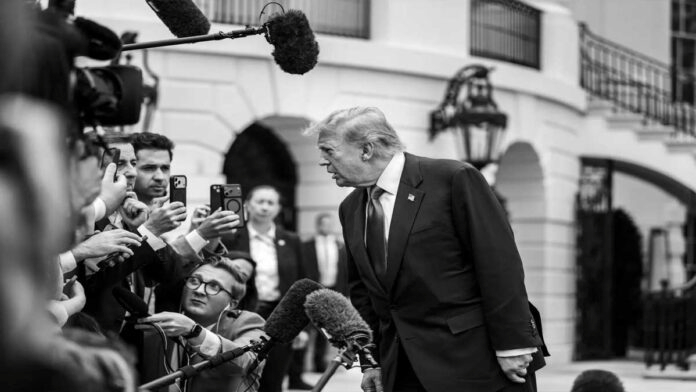
The report also warned that any renewed military campaign against Iran under President Donald Trump could further intensify the crisis surrounding interceptor shortages.
Complicating matters further, some of Israel’s major missile defense systems are reportedly expected to undergo maintenance in the coming months, potentially increasing Israeli dependence on American support if tensions escalate again.
Responding to questions over the imbalance in weapons usage, Pentagon chief spokesman Sean Parnell defended the joint military effort between the United States and Israel.
Parnell said ballistic missile interceptors represent only one part of America’s broader defense network and stressed that both nations shared operational responsibilities during military operations referred to in reports as “Operation Epic Fury.”
Meanwhile, Israel’s embassy in Washington described the military coordination between the two allies during “Operation Roaring Lion” and “Operation Epic Fury” as one of the strongest examples of strategic cooperation between the two countries.
Despite growing concerns over military inventories, President Trump has continued to maintain a hardline position against Iran’s nuclear ambitions.
Trump recently reiterated that Iran would not be allowed to acquire nuclear weapons under any circumstances and emphasized that the Strait of Hormuz must remain open for international trade.
According to the report, US pressure on Iran and strict naval monitoring operations have significantly impacted Iranian trade activity, with estimates suggesting Tehran is losing hundreds of millions of dollars daily due to regional restrictions and shipping controls.
The evolving situation has intensified global attention on the balance between regional security commitments and America’s long-term military readiness as geopolitical instability continues to reshape defense priorities worldwide.