Washington, D.C., United States — April 30, 2026
A war fought in one region is now reshaping economic realities across the globe.
The latest World Economic Outlook released by the International Monetary Fund (IMF) underscores a growing concern among policymakers: the global economy is being forced to absorb the costs of a conflict it did not initiate.
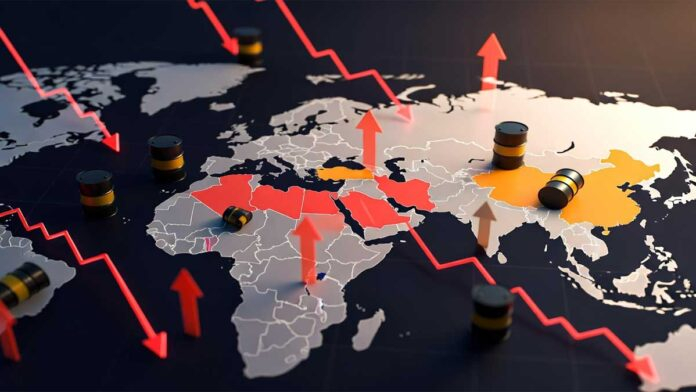
The IMF has revised its global growth forecast for 2026 down to 3.1%, reflecting the mounting impact of geopolitical instability—particularly disruptions tied to the Middle East. While the downgrade may appear modest, economists stress that even a fraction of a percentage point represents trillions of dollars in lost output and widespread economic strain.
📉 Growth Downgrade Signals Wider Economic Stress
According to the IMF, earlier optimism around steady recovery, resilient trade, and strong investment momentum has been disrupted by escalating tensions affecting global energy markets.
Pierre-Olivier Gourinchas, the IMF’s chief economist, cautioned that the current projections may already underestimate the severity of the situation, noting that prolonged disruptions could push the world economy closer to a more adverse scenario.
A key pressure point remains the Strait of Hormuz, a vital artery for global oil supply. Any sustained disruption in this corridor has immediate ripple effects on energy prices worldwide.
⚠️ Multiple Risk Scenarios Emerging
The IMF outlines three possible paths for the global economy, each tied to how the conflict evolves:
- Baseline Scenario: Limited disruption, oil stabilizes near $82 per barrel, global growth holds at 3.1%
- Adverse Scenario: Extended conflict, oil approaches $100, growth slows to 2.5%
- Severe Scenario: Prolonged escalation, oil exceeds $110, growth drops to 2.0%, raising recession risks
Current market trends suggest the global economy may already be edging toward the more pessimistic outlook.
🌍 Unequal Impact Across Regions
The economic burden is not evenly distributed.
Countries in the Middle East and Central Asia face the sharpest downturns, driven by infrastructure damage, reduced exports, and declining investor confidence.
Europe, still adjusting to the aftershocks of the Russia-Ukraine conflict, is projected to grow at just 1.1%, reflecting continued vulnerability to energy shocks.
China’s growth is expected to moderate to 4.4%, while emerging markets face tightening financial conditions and capital outflows.
The United States is forecast to expand at 2.3%, supported by domestic demand and investment, though inflation risks remain elevated.
India stands out as a relatively strong performer, with growth projected at 6.5%, driven by domestic resilience and favorable policy conditions.
⛽ How Conflict Translates Into Everyday Costs
The IMF identifies three primary transmission channels through which war impacts global economies:
- Energy Shock: Supply disruptions drive up oil and gas prices
- Inflation Pressure: Rising costs spread across goods and services
- Financial Volatility: Markets react to uncertainty with tighter credit and reduced investment
For households, this translates into higher fuel costs, rising food prices, and increased borrowing expenses.
🏦 Policy Dilemmas Intensify
Governments and central banks now face a complex challenge: controlling inflation without derailing growth.
While subsidies may offer short-term relief, the IMF cautions against broad-based interventions, recommending targeted support for vulnerable populations instead.
The report also highlights a growing concern that inflation expectations could become entrenched, making it harder to stabilize prices without significant economic slowdown.
🔎 A Defining Moment for the Global Economy
The IMF’s message is clear: the most effective way to stabilize global markets would be a swift resolution to the conflict.
Until then, economies worldwide will continue to navigate uncertainty, absorbing the financial consequences of geopolitical instability far beyond the conflict zone.
For billions of people, the economic impact is already becoming visible—not in headlines, but in everyday expenses and shrinking opportunities.
📚 Sources
- IMF World Economic Outlook April 2026
- Reuters (energy markets and global economy coverage)
- International Monetary Fund Blog — Insights by Pierre-Olivier Gourinchas