Hormuz Flashpoint: IRGC Gunfire Forces Indian Ships to Retreat, New Delhi Summons Iranian Envoy
April 18, 2026 | by INVC Desk
New Delhi/Dubai — April 18, 2026
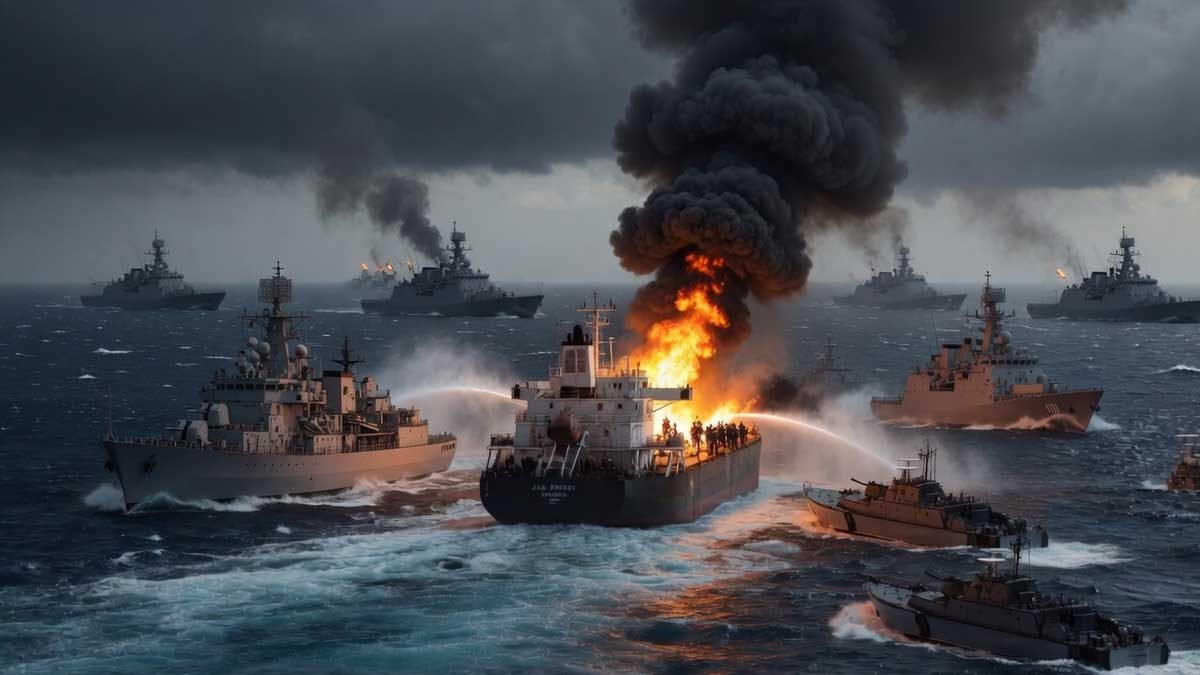
Tensions in the Gulf surged again after reported gunfire by Iran-linked forces forced two India-bound vessels to reverse course in the Strait of Hormuz, prompting New Delhi to summon Tehran’s envoy and seek an explanation.
According to official and maritime sources, the incident involved personnel associated with the Islamic Revolutionary Guard Corps (IRGC), raising fresh concerns over navigation safety in one of the world’s most critical energy corridors.
Indian Ships Forced to Turn Back After Gunfire
Two vessels — Jag Arnav and Sanmar Herald — were caught in the escalation while transiting the narrow waterway.
- The Jag Arnav, carrying approximately 2 million barrels of Iraqi crude oil, was reportedly targeted during the confrontation
- The second vessel remained nearby but was not directly hit
- Following the incident, both ships aborted their passage and turned back from Hormuz
No injuries among crew members have been reported, though the episode has intensified fears among shipping operators.
Route Reopens, Then Closes Again
The development comes just days after the vital shipping lane was temporarily reopened following nearly 50 days of restrictions. Maritime agencies indicated that multiple vessels had resumed transit before the situation deteriorated again.
On Saturday, fresh restrictions were reportedly imposed, accompanied by incidents of firing and projectile threats near commercial vessels.
India Responds, Summons Iranian Ambassador
India has reacted strongly to the developments.
Government sources confirmed that New Delhi has summoned the Iranian ambassador, registering a formal protest and demanding clarity on the reported firing near Indian-flagged vessels.
Officials emphasized that India expects safe and uninterrupted maritime movement through international waters and is closely monitoring the situation.
What Happened in the Gulf?
According to a UK-based maritime security agency, two IRGC-linked gunboats allegedly opened fire near a tanker northeast of Oman. There were also reports of an unidentified projectile targeting another commercial vessel in the vicinity.
Despite the escalation, all ships and crew involved have been reported safe so far.
Why Hormuz Matters Globally
The Strait of Hormuz handles nearly 20% of the world’s oil shipments, making it one of the most strategically vital maritime chokepoints.
Any disruption here can:
- Trigger global oil price spikes
- Disrupt supply chains
- Increase insurance and freight costs
India, as a major importer of Gulf oil, remains particularly exposed to instability in this region.
Geopolitical Context
The latest escalation comes amid ongoing tensions involving Iran, the United States, and Israel, with competing claims over sanctions and maritime access.
Iran has indicated its actions are linked to responses against restrictions imposed on its shipping and ports, while earlier diplomatic signals had suggested a possible easing of tensions — a scenario now thrown into doubt.
What Happens Next?
- Indian Navy monitoring developments; assets positioned in nearby waters
- Diplomatic engagement between India and Iran expected to intensify
- Global markets likely to watch closely for oil supply disruptions
The situation remains fluid, with further official confirmation awaited from all sides.
RELATED POSTS
View all


Trump Signals Military Option on Iran Oil Hub; Global Tensions and Oil Prices Surge
March 30, 2026 | by INVC Desk