
New Delhi, India — April 17, 2026
India Implements Women’s Reservation Law, PM Modi Praises ‘Nari Shakti’
India has officially implemented the Women’s Reservation Law, a landmark reform aimed at increasing female representation in politics, with the central government issuing the formal notification this week.
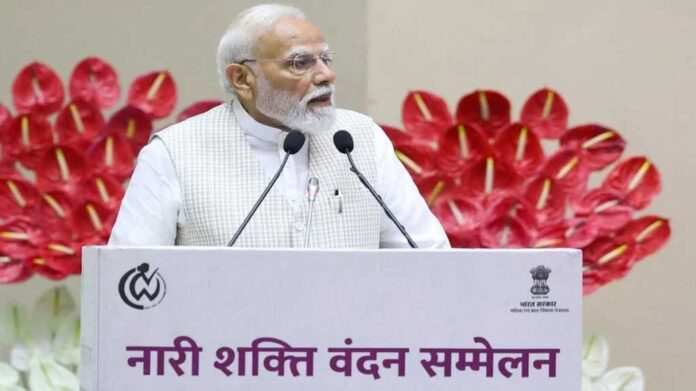
Prime Minister Narendra Modi welcomed the move and praised the role of women in nation-building, calling “Nari Shakti” a defining force behind a strong and progressive India.
33% Reservation for Women in Legislatures
The law, which came into effect on April 16, 2026, mandates 33% reservation for women in the Lok Sabha and all state legislative assemblies.
The legislation—officially known as the Nari Shakti Vandan Adhiniyam—was passed by Parliament in September 2023 and is widely seen as a transformative step toward gender equality in governance.
PM Modi Highlights Women’s Contribution
In a series of posts on X (formerly Twitter), Prime Minister Modi emphasized the strength and contribution of women across sectors.
He described India’s women as the backbone of the country’s progress, highlighting their dedication, resilience, and service in shaping modern India. He also shared Sanskrit verses praising their role in society.
Implementation Linked to Census and Delimitation
Despite the law coming into force, its actual implementation in elections will take time.
According to provisions in the Act, the reservation will only be applied after the next Census and subsequent delimitation process, expected to follow the 2027 Census. This means the benefits are unlikely to be visible before the 2029 general elections.
Officials clarified that the current Lok Sabha cannot implement the reservation until constituency boundaries are redrawn based on updated population data.
Parliament Debates Key Bills on Seat Expansion
The government is currently discussing three related bills in Parliament, including a proposal to increase the total number of Lok Sabha seats to 850 as part of the delimitation exercise.
Prime Minister Modi assured lawmakers that no state would face discrimination during the process, calling it a “guarantee” from his government.
Union Home Minister Amit Shah also addressed concerns, particularly from southern states, stating that their representation would not decrease.
He noted that seats in southern India could increase from 129 to 195, with Tamil Nadu alone expected to see its seats rise from 39 to 59.
A Major Step Toward Gender Equality in Politics
The Women’s Reservation Law is being viewed as a historic reform that could significantly reshape India’s political landscape by boosting women’s participation in legislative decision-making.
While the timeline for full implementation remains tied to structural processes like census and delimitation, the law’s notification marks a decisive policy shift toward inclusive governance.