Washington, D.C., April 5, 2026
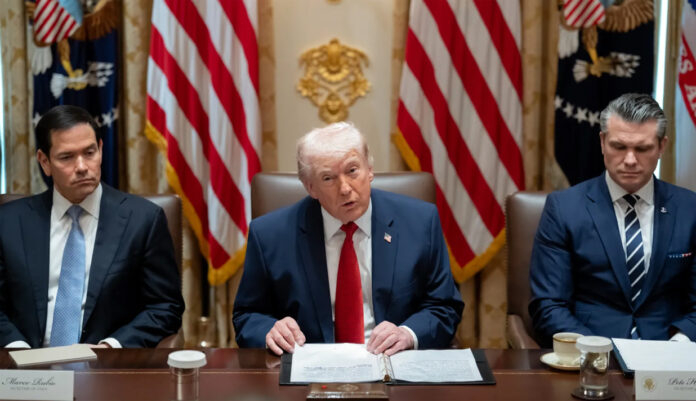
U.S. President Donald Trump has unveiled his proposed federal budget for fiscal year 2027, outlining sweeping cuts to domestic programs alongside increased defense spending and a significant restructuring of federal agencies.
The proposal aims to curb government expenditure and reshape the federal government’s role, shifting several responsibilities to state and local authorities.
Broad Cuts to Domestic Spending
The budget calls for an overall 10% reduction in non-defense spending compared to 2026 levels, which the administration described as a move to eliminate inefficient and redundant programs.
Several major departments would see substantial funding reductions:
- Agriculture Department: Proposed 19% cut, bringing funding to $20.8 billion
- Commerce Department: 12.2% reduction, totaling $9.2 billion
- Health and Human Services: 12.5% cut
- Housing and Urban Development: 13% reduction
- State Department and international programs: 30% cut, down to $35.6 billion
The Education Department is allocated $76.5 billion, though the proposal signals a long-term plan to phase down its role.
Defense and Security Prioritized
Despite broad domestic cuts, the proposal prioritizes funding for defense, border security, law enforcement, and veterans’ services.
The administration has emphasized the need to strengthen national security capabilities, particularly amid ongoing geopolitical tensions.
New Health Agency Proposed
The budget includes the creation of a new entity, the Administration for a Healthy America, focused on nutrition, food security, and public health initiatives.
Meanwhile, the Department of Homeland Security would continue to invest in immigration enforcement and border control, even as its overall budget sees adjustments.
Justice and Policing Focus
The Justice Department is set to receive increased resources for policing and law enforcement activities, while certain grant programs deemed non-essential would be eliminated.
Federal Restructuring Plan
A key pillar of the proposal is reducing the size of the federal bureaucracy and transferring responsibilities—particularly in education and workforce development—to state and local governments.
Russell T. Vought described the proposal as a “historic fiscal transformation,” emphasizing long-term structural changes to government operations.
Next Step: Congressional Debate
The budget proposal will now move to Congress, where it is expected to face intense debate. Lawmakers are likely to scrutinize both the scale of domestic spending cuts and the broader restructuring of federal programs.
Analysts say the outcome will depend on negotiations between the administration and Congress, particularly on issues related to social programs, education funding, and foreign aid.