
New Delhi, India — March 31, 2026
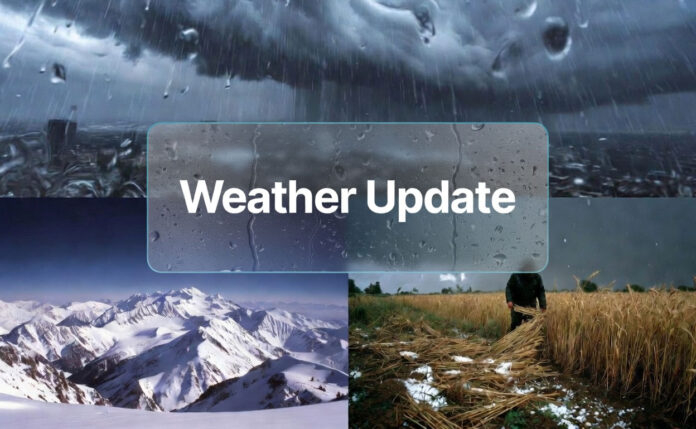
A major shift in weather patterns across India has brought widespread rain, snowfall, and hailstorms, offering relief from rising temperatures but raising fresh concerns for agriculture and infrastructure.
According to the India Meteorological Department (IMD), the ongoing instability is driven by active western disturbances combined with a low-pressure system stretching from Punjab and Haryana to Rajasthan and extending over the Arabian Sea.
Rain, Strong Winds, and Snowfall Across Regions
On Monday, large parts of north India, including Delhi-NCR, witnessed scattered rainfall accompanied by gusty winds reaching speeds of 30–50 km/h. Hailstorms were also reported in isolated areas.
In the higher altitudes of Jammu & Kashmir and Himachal Pradesh, heavy snowfall blanketed mountainous regions, leading to a noticeable drop in temperatures. Meanwhile, northeastern states experienced intense rainfall, triggering waterlogging and raising flood concerns in several districts.
IMD Forecast: Rain to Continue Through the Week
The IMD has warned that two active western disturbances will keep weather conditions unstable throughout the week across northwest India.
Heavy rainfall is expected on April 4, with the Kashmir Valley likely to experience additional snowfall. Thunderstorms, lightning, and strong winds are forecast to affect eastern and northeastern India between March 31 and April 1.
Southern states—including Andhra Pradesh, Telangana, Karnataka, Kerala, and Tamil Nadu—are expected to see scattered light to moderate rainfall with thunderstorms, though conditions are less severe compared to northern regions.
Temperatures across northwest India, except parts of Uttar Pradesh, are likely to fall by 2–4°C during this period.
Himachal Pradesh on Alert After Crop Damage
In Himachal Pradesh, snowfall has been reported in high-altitude regions, including near Atal Tunnel Rohtang. Several districts—Shimla, Mandi, Kullu, and Kangra—have suffered crop damage due to hailstorms impacting apple orchards, wheat, and vegetable crops.
Authorities issued a yellow alert for storms and hail on Tuesday, warning of continued adverse weather conditions until April 5. Power outages were reported in Chamba after rainfall disrupted electricity supply to nearly 300 villages. Flight operations were also affected, with at least one Delhi-bound flight canceled at Gaggal Airport.
Hailstorm Threat Raises Agricultural Concerns
The IMD has issued hailstorm warnings for multiple states, including Himachal Pradesh, Punjab, Rajasthan, and Uttarakhand.
Experts warn that hail could severely damage rabi crops such as wheat and chickpeas. Strong winds may also lead to falling tree branches and disruptions to power lines, increasing the risk of outages in affected regions.
Parts of western Madhya Pradesh and central Maharashtra, including Marathwada, are also expected to face hailstorms accompanied by gusty winds.
Flood Risk in Northeast India
Heavy rainfall alerts have been issued for northeastern states such as Assam, Meghalaya, Arunachal Pradesh, Nagaland, Manipur, Mizoram, and Tripura.
Rainfall between 64.5 mm and 155.5 mm is expected in some areas, raising the risk of rising river levels, urban waterlogging, and localized flooding in rural regions.
Temperature Swings Across the Country
The changing weather patterns have caused significant temperature fluctuations nationwide.
While northern India has recorded a drop in temperatures, bringing cooler conditions, parts of Maharashtra remain hot. Akola recorded a high of 41.4°C, while Najibabad in Uttar Pradesh saw a low of 15.6°C.
Meteorologists caution that the current weather system may continue to trigger rain, thunderstorms, lightning, and hail in the coming days. Authorities are advising residents and farmers to remain alert and take precautionary measures to minimize potential losses.