
Mumbai, India — March 2, 2026
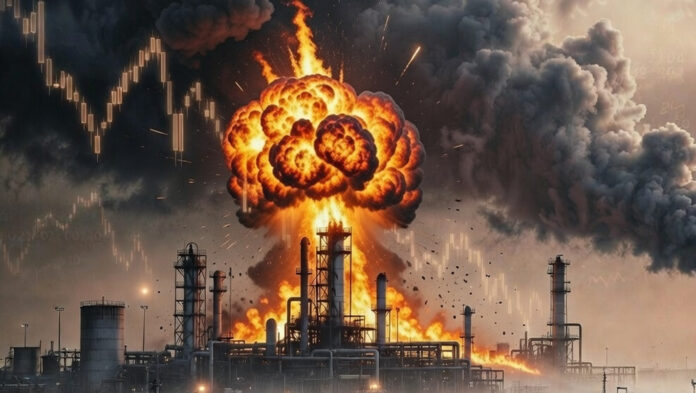
The ongoing conflict between Israel and Iran in West Asia has intensified global energy and financial market turmoil. A major Saudi Aramco refinery shutdown and warnings of a sharp spike in LNG prices have triggered widespread concern. On the same day, Indian equities suffered steep losses as markets reeled from global uncertainty. Meanwhile, India and Canada moved swiftly to secure energy cooperation as part of broader economic safeguards.
Why Saudi Aramco Shut Its Refinery and What It Means
Following a series of drone attacks, Saudi Aramco halted operations at its Ras Tanura refinery, one of the largest in the Middle East with a capacity of 550,000 barrels per day. The facility also serves as a key export terminal for Saudi crude.
The attacks, coupled with disruption to ship traffic in the Strait of Hormuz, drove Brent crude futures up by nearly 10%, signaling heightened risk to global oil supplies.
Goldman Sachs Issues Stark LNG Price Surge Warning
Global energy concerns are not limited to oil. In a new analysis, Goldman Sachs warned that disruptions in LNG (liquefied natural gas) shipments through the Strait of Hormuz could push spot LNG prices up by as much as 130% in Asian and European markets if supply bottlenecks continue.
Analysts estimate that if supply remains constrained for even a month, LNG prices could spike to $25 per MMBtu. Supply delays from Qatar and the UAE, along with reduced offshore gas output near Israel, are cited as contributing factors.
Indian Stock Markets See Historic Sell-Off
The Indian stock market felt the shockwaves of global energy uncertainty.
-
The BSE Sensex plunged 1,048.34 points (1.29%) to close at 80,238.85.
-
The NSE Nifty fell 312.95 points (1.24%) to finish at 24,865.70.
As markets opened, anxious investors erased nearly ₹7.8 lakh crore in equity value, with the Sensex losing more than 2,700 points at its lowest levels.
Market sell-offs reflected heightened risk aversion among participants amid geopolitical instability and sharper commodity prices.
India’s Strategy: Diplomacy and Energy Security
In response to external shocks, New Delhi is pursuing a mix of diplomatic and strategic energy partnerships.
Under recent agreements with Canada, India has moved to enhance long-term energy collaboration and reinforce supply diversification. These accords aim to strengthen energy security and mitigate future price volatility.
Prime Minister Narendra Modi has publicly voiced deep concern over the developments in West Asia, underlining India’s commitment to peace and the safety of its citizens abroad.
Outlook Ahead: Rising Costs, Supply Chain Risk
The attacks on Saudi energy infrastructure and strained shipping lanes in the Strait of Hormuz have elevated risks of inflationary pressures and supply chain disruptions worldwide.
Energy markets are now watching price movements closely as governments and corporations reassess risk exposure. Investors are advised to adopt cautious strategies and hedge against heightened volatility in commodities and equities.
As global tensions persist, coordinated diplomacy and diversified energy sourcing are expected to play central roles in stabilizing markets.