New Delhi, India — March 2, 2026
Rising tensions involving Israel, the United States and Iran have renewed global concerns about the security of the Strait of Hormuz — a narrow but strategically critical oil transit chokepoint. For India, which depends heavily on imported crude, any disruption in this region could carry significant economic consequences.
Why the Strait of Hormuz Matters to India
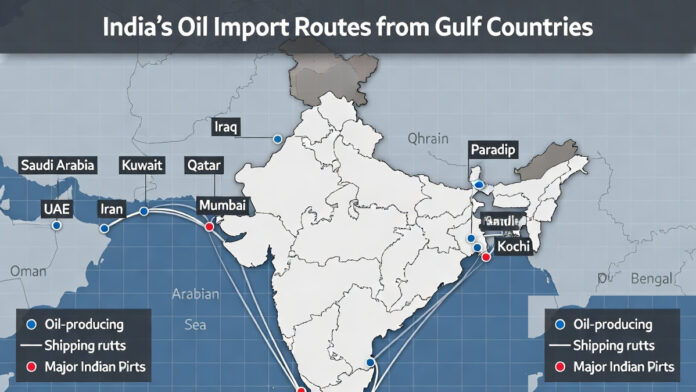
India imports nearly 88–90% of its crude oil requirements. Of that total, approximately 40–50% — roughly 2.5 to 2.7 million barrels per day — passes through the Strait of Hormuz.
A disruption in this route would directly affect supplies from key Gulf producers including Saudi Arabia, Iraq, Kuwait, and the United Arab Emirates.
While Saudi Arabia and the UAE have limited alternative pipeline routes, countries like Qatar and Bahrain remain almost entirely dependent on Hormuz for exports. Qatar, one of the world’s largest LNG exporters, would also face shipping constraints.
Iran itself would incur major economic losses if the route were blocked, as its own exports would stall — potentially straining trade ties with major buyers such as China.
Short-Term vs Long-Term Impact on India
In the immediate term, experts believe India may avoid severe disruption. However, a prolonged escalation could lead to:
Higher global crude prices
Increased freight and insurance costs
Rising inflationary pressures
Widening current account deficit
India imports about 2.5–3 million barrels per day. Analysts estimate that a $1 increase in crude prices can raise India’s annual import bill by approximately $2 billion. If oil prices surge by 25% for an extended period, the import burden could rise by up to $15 billion.
Such a scenario could:
Increase India’s current account deficit by 0.3% of GDP
Push inflation up by around 0.7%
Reduce real GDP growth by approximately 0.2%
Shipping Costs and Supply Chain Delays
Even without a full closure, geopolitical tensions would increase war-risk insurance premiums and freight rates.
If Indian refiners shift purchases from Gulf suppliers to alternatives like the United States, West Africa or Latin America, transit times would rise sharply. While Gulf shipments reach India in 5–7 days, shipments from distant suppliers could take 25–45 days — significantly increasing logistics costs and supply chain complexity.
Sectoral Impact on Indian Industry
Higher crude prices would pressure margins for:
Public sector oil marketing companies
Airlines
Automobile manufacturers
Paint and chemical companies
Logistics operators
However, upstream producers like ONGC and Oil India could benefit in the short term from elevated crude prices.
Does India Have a Safety Cushion?
Strategic Petroleum Reserves
India maintains strategic petroleum reserves capable of meeting approximately 9–15 days of import needs. Additionally, refiners hold operational stocks that can cushion temporary supply disruptions.
Storage depots and refineries across the country also maintain inventories of diesel, petrol, aviation turbine fuel (ATF), and LPG, which can be strategically deployed during emergencies.
Russian Oil as a Buffer
If Gulf flows slow, Indian refiners could increase purchases of discounted Russian crude. Tankers carrying Russian oil frequently operate in the Indian Ocean region, offering a relatively accessible alternative supply buffer.
Diversified Import Base
According to global commodity tracking agencies, India currently imports crude from more than 40 countries. This diversified sourcing strategy enhances flexibility during geopolitical shocks.
However, longer shipping routes from the Americas or Africa would raise freight costs and working capital requirements.
Retail Fuel Prices: Immediate Hike Unlikely
Despite potential international price spikes, analysts believe domestic fuel retailers may avoid immediate price increases in India. The government is expected to closely monitor the situation to contain inflationary pressures.