Washington, D.C. — February 14, 2026
U.S. President Donald Trump announced Friday that he has decided to deploy a second aircraft carrier to the Middle East, citing the need for additional military readiness if diplomatic efforts with Iran over its nuclear program fail. The move comes amid escalating regional tensions and ongoing indirect negotiations.
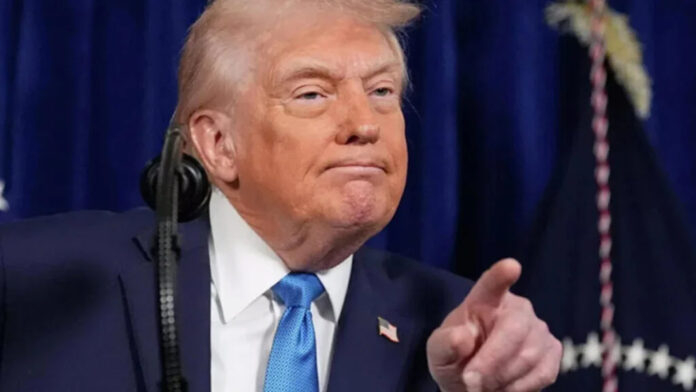
Speaking after meeting troops at Fort Bragg, Trump said a stronger military presence may be necessary if talks do not produce results. He also stated that a change in leadership in Iran would be “the best thing that could happen,” as his administration weighs possible military options against Tehran.
U.S. Sends Major Carrier Strike Group
Earlier in the day, Trump confirmed that the United States is deploying the USS Gerald R. Ford, the world’s largest aircraft carrier, from the Caribbean to the Middle East. The vessel is expected to join the USS Abraham Lincoln strike group, which has already been stationed in the region for more than two weeks alongside guided-missile destroyers.
Officials say the reinforcement is intended to strengthen deterrence and increase operational flexibility in case of conflict or escalation.
Warning to Iran Amid Nuclear Negotiations
Before departing the White House for North Carolina, Trump warned that failure to reach a deal could lead to “very painful” consequences for Iran. The statement followed recent indirect talks between U.S. and Iranian representatives in Oman, which aimed to revive dialogue over Tehran’s nuclear activities.
Regional governments in the Gulf have cautioned that any military strike could ignite a broader conflict, particularly as tensions are already high.
Rising Regional and Internal Pressures
Iran is currently facing domestic pressure as memorial gatherings begin for those killed during recent protests, marking the traditional 40-day mourning period. Analysts say such events can intensify political strain on the government.
Recent incidents have further heightened tensions. U.S. forces reportedly shot down an Iranian drone that approached the Lincoln carrier group. On the same day, Iranian forces allegedly attempted to stop a U.S.-flagged vessel in the Strait of Hormuz, a critical global oil shipping route.
Strategic Context Behind the Deployment
The Ford carrier was previously moved from the Mediterranean to the Caribbean last October as part of contingency planning linked to Venezuela. U.S. Southern Command said operational capabilities in the Western Hemisphere would remain unaffected despite the redeployment.
Trump also recently held extended talks with Israeli Prime Minister Benjamin Netanyahu, who has urged that any agreement with Iran include limits on its ballistic missile program and an end to support for groups such as Hamas and Hezbollah.
Why This Deployment Matters
Defense analysts say deploying two carrier strike groups signals a significant escalation in U.S. military posture and is often used to demonstrate deterrence without immediate combat action. Aircraft carriers serve as mobile bases capable of launching air operations, intelligence missions, and rapid-response strikes.
The decision underscores Washington’s dual-track strategy: pursuing negotiations while simultaneously strengthening military leverage in the region.