
Mumbai, India | February 1, 2026
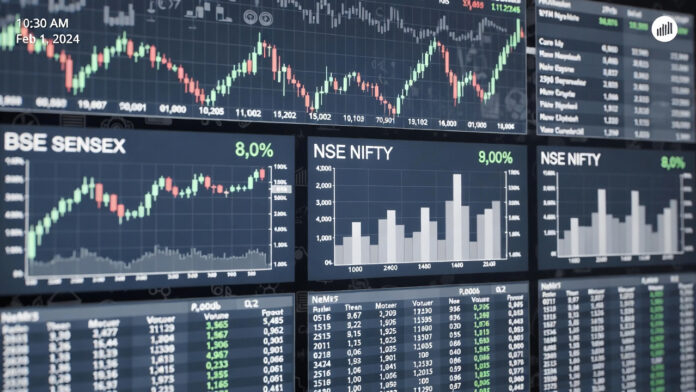
Indian equity markets opened on a weak note on Sunday ahead of the presentation of the Union Budget but quickly recovered during intraday trade, turning positive in a rare weekend session organized to allow immediate market reaction to budget announcements.
Despite Sunday typically being a market holiday, investors witnessed live trading as both the National Stock Exchange of India (NSE) and the Bombay Stock Exchange (BSE) remained open for a special session.
📊 Markets Recover After Early Losses
In early trade, the 30-share BSE Sensex slipped 15.04 points (0.02%) to 82,254.74, while the 50-share Nifty 50 declined 31.75 points (0.13%) to 25,288.90.
However, buying interest soon emerged. By 10:39 a.m., the Sensex had risen 255.96 points to 82,525.74, while the Nifty gained 56.60 points to trade at 25,377.25, reflecting cautious optimism among investors ahead of key fiscal announcements.
🏛️ Why Markets Are Open on a Sunday
The special trading session was organized due to the presentation of the Union Budget 2026–27, which is being delivered on a Sunday this year.
Normally, Indian stock markets remain closed on Saturdays and Sundays. However, both NSE and BSE announced that markets would remain open on February 1 to allow investors to react instantly to policy announcements, tax changes, and sector-specific measures outlined in the budget speech.
According to exchange circulars, the session was labeled a “Special Live Trading Session”, enabling real-time price discovery during the finance minister’s address.
📜 A Rare Moment in Market History
This marks only the second time in India’s market history that trading has taken place on a Sunday. Previously, domestic equity markets were opened on February 28, 1999, during the tenure of former Prime Minister Atal Bihari Vajpayee, when the Union Budget was also presented on a weekend.
📈 Why the Decision Matters
Market experts say keeping markets open on Budget Day offers several advantages:
Immediate Action: Investors can instantly assess and respond to budget announcements as they are made.
Better Risk Management: If markets were closed, reactions would be delayed until Monday, increasing uncertainty and volatility.
Improved Transparency: Live trading reduces the risk of off-market speculation that can occur when major announcements are made on holidays.
The finance minister’s budget speech typically begins around 11:00 a.m., covering key areas such as fiscal deficit targets, tax slabs, and sectoral incentives—factors that significantly influence market sentiment.