Mumbai, India | January 23, 2026
Rupee Crashes to Historic Low Against US Dollar
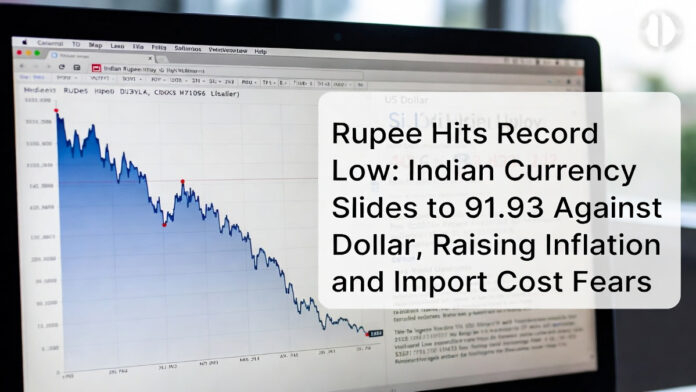
The Indian rupee plunged to its weakest level on record, closing at 91.93 per US dollar (provisional) on Friday, as sustained dollar strength and intense pressure in currency markets triggered fresh concerns over inflation and import costs.
The sharp decline marks the biggest fall in the rupee’s history, underlining growing stress in the foreign exchange market and raising alarm for policymakers and import-dependent sectors.
💱 What Happened in the Currency Market?
Persistent volatility dominated the currency market throughout the session. By the end of trade, the rupee settled at 91.93 against the US dollar, breaking all previous records. The provisional closing highlights the scale of selling pressure faced by the domestic currency.
Market participants attributed the fall largely to a stronger US dollar, continued foreign fund outflows, and elevated global uncertainty, which pushed investors toward safe-haven assets.
⚠️ Why the 91.93 Level Matters
The 91.93 mark is considered both psychologically and technically critical for the rupee.
It makes imports significantly more expensive, especially crude oil and essential commodities
It could widen the current account deficit (CAD)
It may add upward pressure on inflation, impacting household expenses
Economists warn that sustained weakness at this level could pose broader challenges for the economy if not stabilized.
🏦 Central Bank and Policy Watch
The historic fall has put the spotlight firmly on the Reserve Bank of India, as markets closely track whether the central bank steps in to curb volatility through intervention or liquidity measures.
Currency traders say the next few sessions will be crucial in determining whether the rupee stabilizes near current levels or faces further downside pressure.
🌍 Global Factors Driving the Rupee Lower
Several external factors have contributed to the rupee’s decline:
Strengthening of the US Dollar amid global risk aversion
Higher US bond yields attracting capital flows away from emerging markets
Ongoing geopolitical and macroeconomic uncertainty
These factors have collectively weighed on emerging market currencies, with the rupee among the hardest hit.
🔍 What Happens Next?
Markets will now watch:
Dollar movement and US macro data
RBI’s stance on currency intervention
Foreign institutional investor (FII) flows
Crude oil price trends
Any sustained recovery will depend on easing global pressures and improved risk sentiment. Until then, volatility in the rupee is expected to remain elevated.