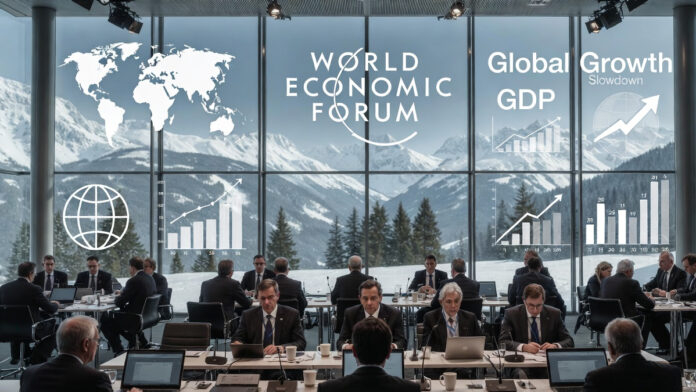
Davos | January 19, 2026
The World Economic Forum (WEF) began its 2026 session in Davos on January 19, launching discussions under the theme “the spirit of dialogue.” The annual gathering comes at a time when global cooperation remains limited, with nations divided over geopolitical conflicts, supply-chain realignments, and diverging economic policies.
As the forum opened, the International Monetary Fund (IMF) released its latest World Economic Outlook Update, projecting a further slowdown in the world economy. The IMF expects global growth to ease to 3.1% in 2026, compared with 3.3% in 2024, reflecting a dimmer outlook for several major economies.
Advanced Economies Set for Weak Expansion
According to the IMF, advanced economies are expected to grow at just around 1.5%, weighed down by high interest rates, cooling labor markets, and persistent inflation challenges. Ongoing structural concerns—such as aging populations and slow productivity gains—continue to dampen medium-term prospects.
Emerging Markets Maintain Stronger Growth
In contrast, emerging and developing economies are projected to expand by around 4%, benefitting from stronger domestic demand and more flexible economic conditions. Asia remains the primary driver of global growth momentum.
Key Risks Highlighted in Brussels Briefing
A separate IMF briefing in Brussels outlined major risks influencing the global economic path, including:
Persistent inflationary pressures
Labor market cooling across advanced economies
Rising geopolitical tensions and conflict-driven uncertainty
Policy divergence and potential trade disruptions
These factors could influence financial markets, commodity prices, and global investment flows.
As world leaders meet in Davos, the central question is whether enhanced international dialogue can help stabilize a slowing global economy and address shared challenges in security, climate, technology, and growth.