New Delhi | January 13, 2026
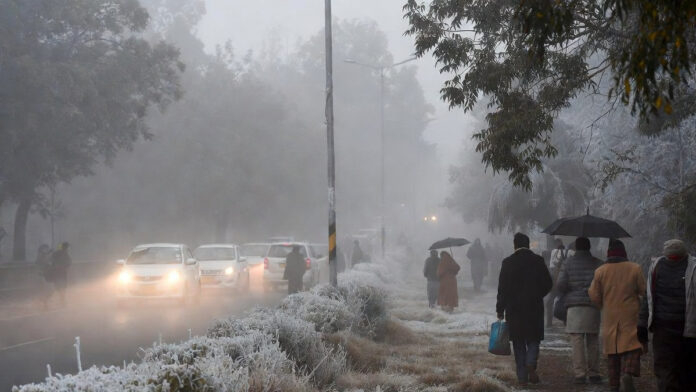
A brutal cold wave, intensified by icy winds flowing down from the Himalayas, has pushed large parts of North India into a deep freeze. The India Meteorological Department (IMD) has issued a red alert for Delhi, Haryana, and Punjab as temperatures plunged sharply and dense fog severely disrupted daily life and transport services.
Icy Winds Trigger Temperature Freefall Across the Region
Cold winds sweeping from the higher Himalayan ranges have sent temperatures across Delhi, Haryana, Punjab, and Rajasthan far below seasonal averages. Delhi recorded a minimum temperature of 3.2°C, while Gurugram shivered at 0.6°C, one of the lowest readings of the season.
Visibility collapsed dramatically as thick fog engulfed major cities and highways, affecting road movement, rail schedules, and flight operations.
Why the Cold Intensified
According to IMD, strong northern winds combined with the influence of a western disturbance have intensified the cold wave. Reduced wind speed and rising moisture levels have also contributed to widespread fog formation and near-zero visibility.
In parts of Delhi, Uttar Pradesh, and Haryana, morning visibility dropped to between 0 and 50 meters, creating hazardous travel conditions.
Where Temperatures Hit the Lowest Levels
Several states recorded their coldest night of the season:
Kukumsari, Himachal Pradesh: -10.8°C
Nyoma, Ladakh: -19.5°C
Fatehpur, Rajasthan: 0.4°C
Bareilly, Uttar Pradesh: 3.8°C
The biting cold has led to significant disruption in public life across the region.
IMD Issues Alerts Across Multiple States
The Meteorological Department has issued:
Red Alert: Delhi, Haryana, Punjab
Orange Alert: Uttar Pradesh (next 2–3 days)
Fog Advisory: Bihar, Himachal Pradesh, Jammu & Kashmir, Ladakh, Rajasthan, Uttarakhand
Severe fog and cold wave conditions may continue to impact road travel, railway schedules and aviation operations.
Impact on Daily Life
The extreme weather has led to altered school timings in several states, while outdoor workers continue to face harsh conditions. In hill regions, water pipelines, springs and small streams have partially frozen.
Hospitals have also reported a surge in patients suffering from respiratory issues, hypothermia and cold-related illnesses. Authorities have advised residents to avoid unnecessary travel and stay adequately protected against the cold.
What’s Next for North India?
IMD forecasts that a fresh western disturbance will become active around January 15, likely intensifying snowfall in the Himalayan states. This could further worsen cold conditions in the northern plains, keeping temperatures low for several more days.
For now, large parts of North India are expected to remain under severe cold and fog conditions, with little immediate relief in sight.