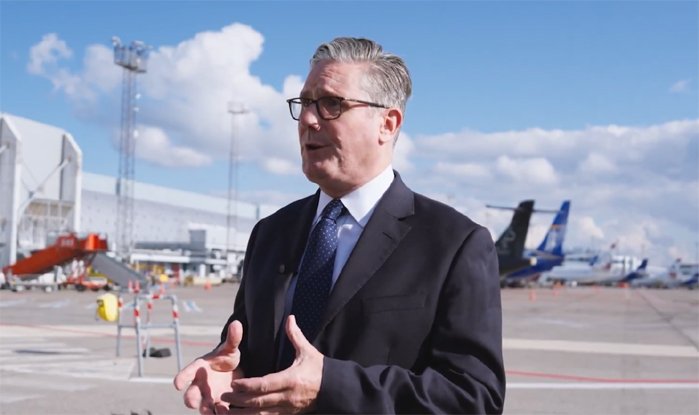
London : In one of the boldest financial actions taken against Russia since its full-scale invasion of Ukraine in 2022, UK Prime Minister Keir Starmer announced on December 9, 2025, that Britain is finalizing a plan to transfer £100 billion (approx. $125 billion USD) from frozen Russian sovereign assets to Kyiv. The move represents one of the largest international asset seizures since World War II, signaling a new era in global sanctions warfare.
Speaking at a London press conference, Starmer said the plan delivers “justice for aggression”, arguing that Russia must bear responsibility for the devastation it inflicted. Although the UK directly holds around £15 billion of Russia’s immobilized reserves, the transfer leverages a G7 “extraordinary revenue” mechanism to amplify the financial impact and unlock the larger pool of over $300 billion frozen worldwide.
Russia Condemns “Theft,” Warns of Harsh Retaliation
The Kremlin reacted sharply. Spokesperson Dmitry Peskov called the decision “outright theft” and threatened reciprocal seizures of Western assets in Russian jurisdiction, warning of “economic Armageddon” if the plan advances.
Legal experts anticipate a wave of lawsuits from Russian oligarchs and state-linked entities in London courts, challenges that could delay actual disbursements until mid-2026.
Ukraine Welcomes Funding Amid War Shortfall
Ukrainian President Volodymyr Zelenskyy, appearing via video call, praised the announcement as a “historic show of solidarity.” Ukraine has received $100 billion in total aid since 2022 but faces a $40 billion budget deficit for 2026, particularly for defense, energy, and reconstruction.
The expected UK-G7 transfer is likely to support:
NATO interoperability upgrades
Drone production capacity
Energy grid repair and winter resilience
Frontline logistics during intensified Russian offensives
Oil markets reacted instantly, with prices jumping 3% amid fears of Russian economic retaliation and broader geopolitical instability.
Global Reactions Divided
While Washington and Brussels privately support the UK initiative—and note their own moves, such as the $50 billion US-led loan package in October 2025—critics across the Global South remain uneasy.
Governments in India and Brazil warned that weaponizing sovereign reserves could set a dangerous precedent, potentially destabilizing international financial norms and discouraging developing nations from parking reserves in Western banks.
Starmer dismissed these concerns, arguing the transfer constitutes “reparations for war crimes,” not a restructuring of financial norms.
G7 Coordination and Legal Framework
G7 finance ministers are coordinating the technical architecture that would:
Use profits and interest generated by immobilized Russian assets
Create long-term certainty for Ukraine’s financing
Share the liability among participating nations to avoid unilateral exposure
The plan is expected to be formally ratified at a special G7 summit early next year.
Peace Talks Stalled as War Intensifies
The announcement comes as peace negotiations in Geneva appear frozen, with Russia demanding territorial concessions and Ukraine insisting on sovereignty and reparations.
Meanwhile, military dynamics continue to escalate:
Ukraine reports increased Russian missile barrages
Kyiv accelerates drone production
NATO allies expand intelligence-sharing frameworks
Analysts warn the UK decision may prolong the conflict, even as it strengthens Ukraine’s ability to resist Russian advances.
Reshaping Global Finance and Conflict Norms
If implemented, the transfer would mark a paradigm shift in sanctions enforcement, turning frozen sovereign reserves into active funding tools for wartime resistance. Experts say the decision could reshape post-Cold War financial order, influencing everything from reserve management to geopolitical risk calculations.
With legal and diplomatic storms brewing, the world’s financial architecture may be entering its most contested period since the 1944 Bretton Woods agreement.