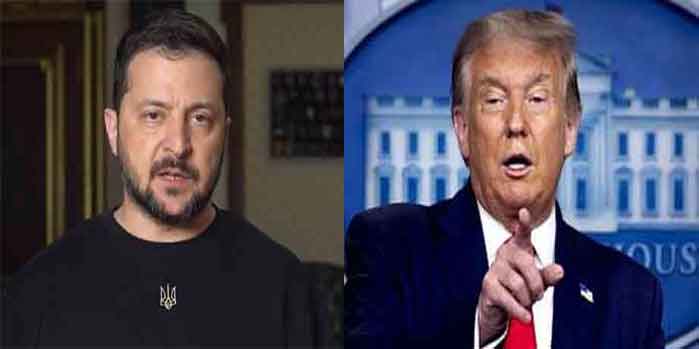
Washington / Kyiv, : A tense diplomatic showdown unfolded on December 11 when U.S. President Donald Trump pressed Ukrainian President Volodymyr Zelensky to accept a Russia-backed peace framework, conditioning the long-delayed $61 billion U.S. aid package on Europe sharing more of the financial burden and Kyiv entering 30 days of negotiations.
According to senior officials, the proposed deal—mediated by U.S. Envoy Keith Kellogg—includes autonomy for the Donbas region and a referendum on Crimea’s status, while Russia, under President Vladimir Putin, is demanding Ukraine formally abandon its NATO aspirations. Zelensky, whose domestic approval has fallen nearly 20% amid wartime fatigue, reportedly pushed back, insisting on security guarantees and proposing the revival of a Black Sea grain corridor as part of any wider agreement.
The stakes are immense. The war, now in its fourth year since Russia’s 2022 invasion, has killed an estimated 500,000 people. On December 1, a missile strike in Dnipro killed four civilians, underscoring the conflict’s unrelenting toll even as diplomatic talks resurface.
The call ignited global debate, trending as #UkraineTalks with more than 2 million mentions. The proposed framework has split the European Union:
German Chancellor Olaf Scholz cautiously supports the U.S. push, calling negotiations “a path worth testing.”
French President Emmanuel Macron warns it could embolden Moscow, risking escalation.
Trump, buoyed by his post-midterm momentum, framed the proposal as an “America First peace push”, arguing that U.S. taxpayers cannot indefinitely shoulder Ukraine’s defense. He has repeatedly touted that the U.S. has already provided $100B in total aid since the war began.
International reactions remain mixed. UN Secretary-General António Guterres described the emerging talks as “a fragile hope,” while national security experts such as Fiona Hill cautioned that any settlement must avoid rewarding aggression, a precedent that could destabilize global norms.
Whether the new diplomatic pressure results in progress—or deepens geopolitical rifts—remains to be seen. Analysts note that if successful, the plan could bring an end to Europe’s largest conflict since World War II, but if mishandled, it risks reshaping the security architecture of the continent for years to come.